Roofing in Aitkin, MN
Mille Lacs headwaters · Aitkin County
Silver Loon covers Aitkin (Aitkin County): roof replacement, repair, storm damage, and ice dams. Based in Central Minnesota.
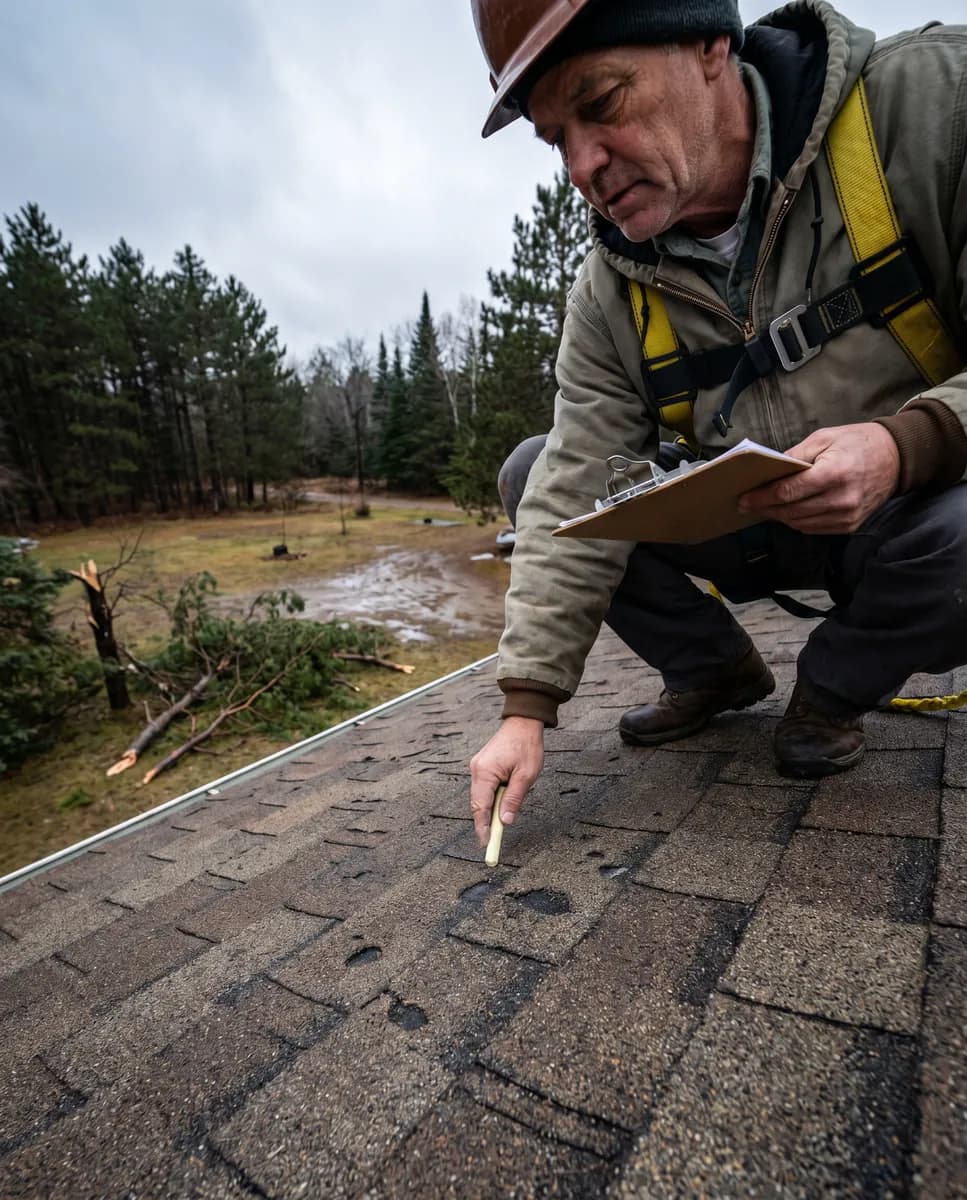
The June 12, 2024 EF-2 tornado and baseball-size hail put Aitkin County through one of its worst storm events in recent memory. Near Sandy Lake and along the Ripple River corridor, roofs that looked intact from the ground had missing ridge caps, lifted flashing, and mat damage that only showed up when someone got on them. If your home was in that track and has not been inspected, you may be carrying real storm damage without knowing it.
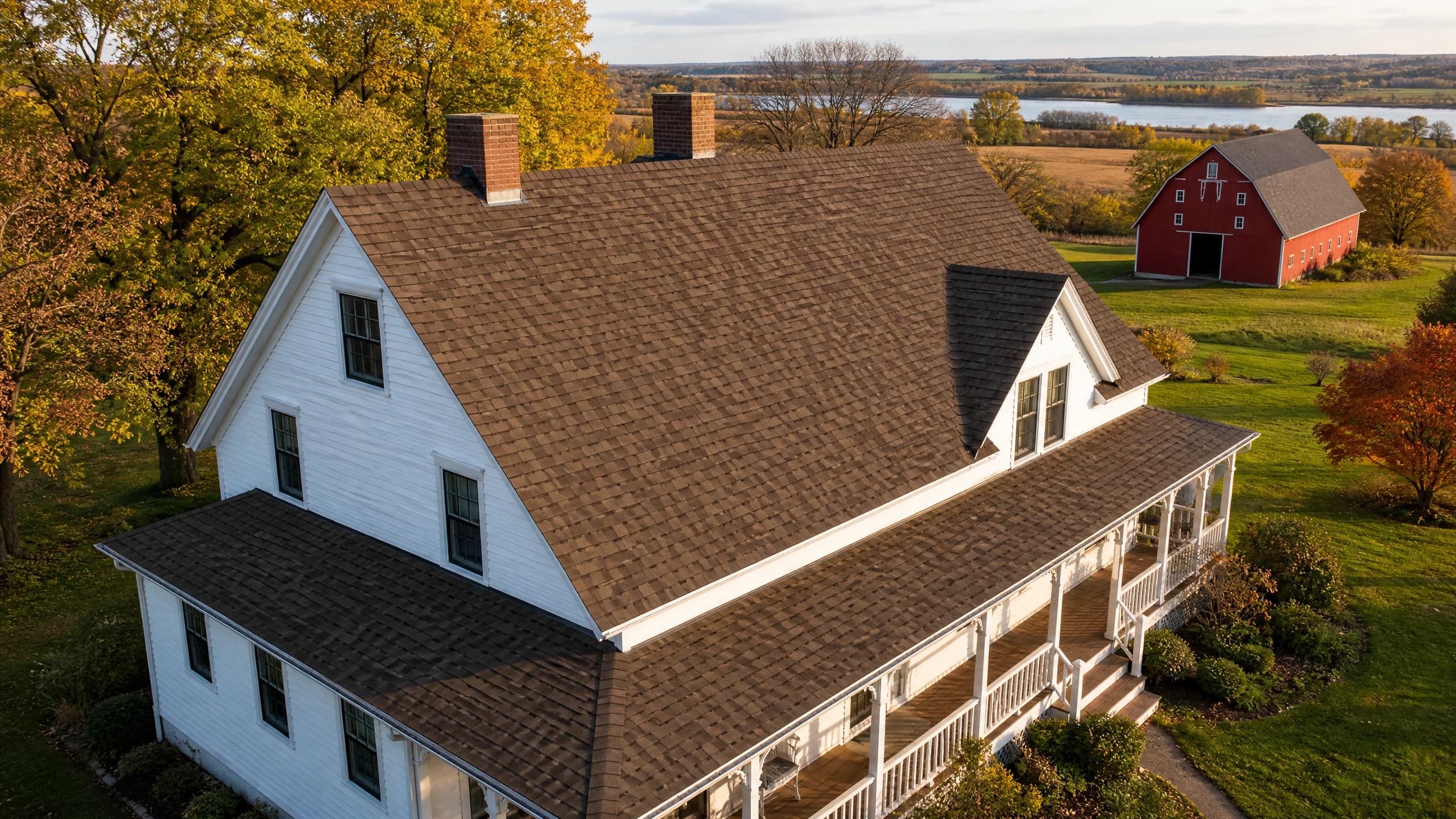
Aitkin's housing stock goes back to the Northern Pacific Depot era, and a number of homes near the river carry original or early-replacement roof assemblies that have been through a lot of north-central Minnesota winters. Whether your question is about the June 2024 damage, general wear, or seasonal ice dam problems, an inspection gives you the answer before the next winter makes it an emergency.
About Aitkin, MN
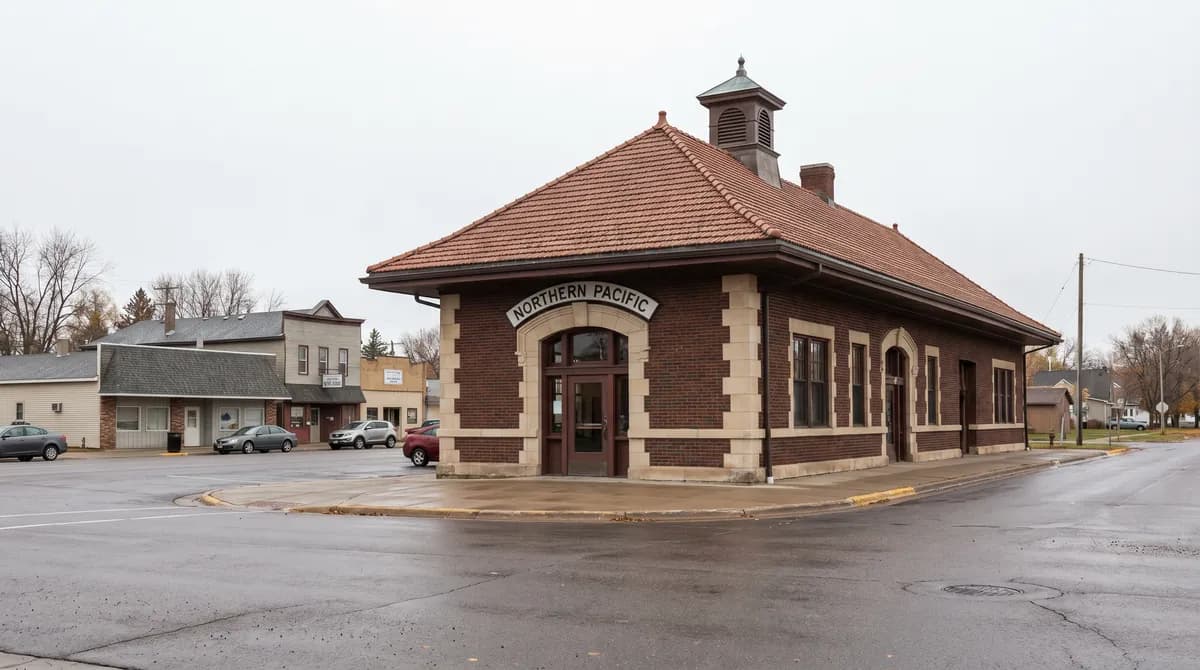
Aitkin is the county seat of Aitkin County, a small river city of about 2,100 residents where the Ripple River meets the Mississippi about 140 miles north of the Twin Cities. The town built its identity on railroads and timber — the Northern Pacific arrived in the late 1800s and the 1916 Mission Revival depot it left behind, with cut-stone trimmings and a German tile roof, now houses the Aitkin County Historical Society's Depot Museum. The 1920 Aitkin County Courthouse, a Beaux-Arts building on the National Register of Historic Places, anchors the center of a compact downtown that has changed slowly over a century of economic shifts. The 1911 Carnegie Library still stands a block away. These buildings were put up to last, and they have — which is more than can be said for the roofing systems on many of the older residential properties surrounding them.
The county's economy today runs on fishing, wild rice harvesting, and the seasonal cabin traffic that Sandy Lake, the Mille Lacs flowage lakes to the south, and the Rice Lake National Wildlife Refuge draw from late spring through fall. The Fish House Parade each December — a long-standing tradition that fills the frozen lake with decorated portable fish houses — signals the start of the deep cold season in a way that means something to anyone whose livelihood depends on being outdoors in January. Aitkin County is genuinely rural; the next city of any size is Brainerd to the west or McGregor to the northeast, and properties outside the city limits often sit at the end of long gravel driveways with no neighbors visible from the front porch.
Median property values in Aitkin County reached approximately $255,800 in 2024, up nearly 9 percent from the prior year — a reflection of continued demand for lake-access and rural properties from buyers looking to leave the metro corridor. That price range spans a wide spectrum: a modest in-town bungalow on the Mississippi floodplain, a 1970s split-level on the north side, and a lake cabin on Sandy Lake can all fall within that median, but each presents a different roofing situation in terms of pitch, material history, and exposure to the elements.
Housing stock and market
Aitkin's residential housing stock is older and more varied than most metro markets. The in-town neighborhoods carry a mix of early-twentieth-century bungalows and Craftsman houses, postwar ranch homes from the 1940s through 1960s, and a scattering of 1970s and 1980s construction on the city's edges. Attic insulation in homes from those earlier decades frequently falls short of current Minnesota energy code — not because original owners cut corners, but because standards have changed substantially since the houses were built. Under-insulated attics lose heat through the deck, which is precisely the mechanism that produces ice dams in a climate with Aitkin's snowfall totals.
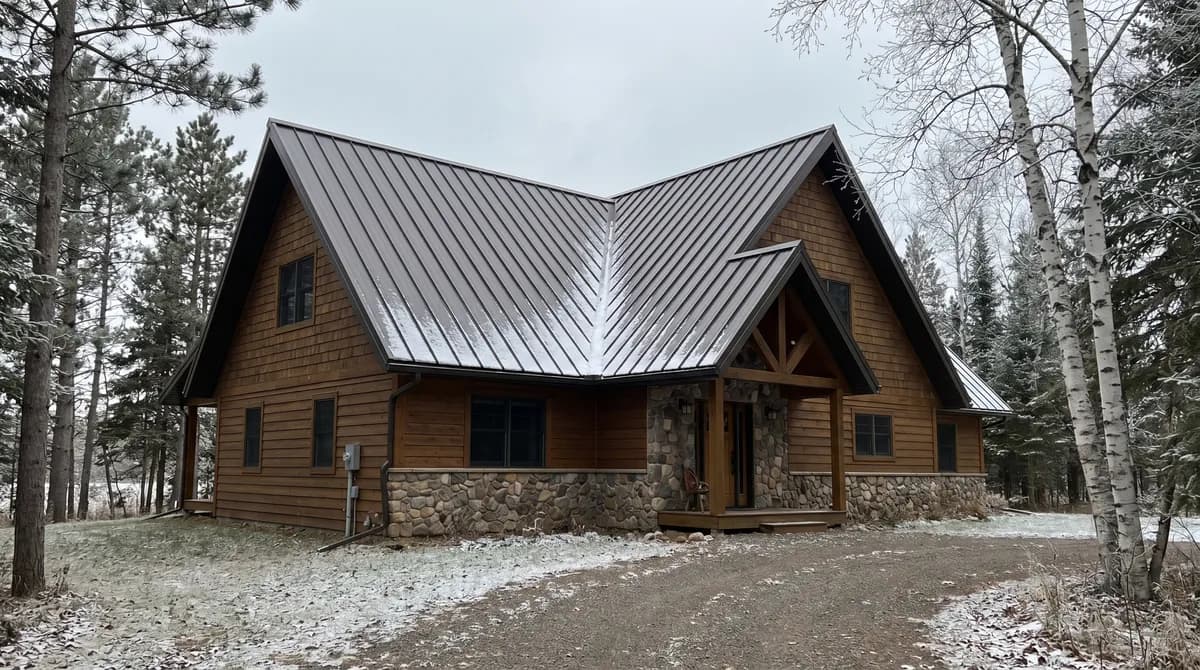
The lake cabin and rural property segment is significant. Sandy Lake sits just a few miles northeast of town, and the broader network of lakes and flowages across Aitkin County supports hundreds of seasonal and year-round cabin properties. Standing-seam metal roofing is far more common on these properties than on in-town houses — for good reason. A metal roof on a low-to-moderate-pitch cabin sheds snow passively and continuously rather than holding a season's accumulation until a warm snap or a homeowner with a roof rake intervenes. When a cabin is occupied only on weekends, no one is available to manage snow load or catch a developing ice dam early. Metal roofing on those structures is a practical decision, not a cosmetic one. Farmhouses on the county's agricultural land follow the same logic — standing-seam on a working outbuilding or a century-old farmhouse is a 40-year roof that does not require the owner to revisit the decision.
Weather and roof realities in Aitkin
Aitkin averages 50 to 55 inches of annual snowfall, more than the Twin Cities metro and delivered across a longer season. Snow begins accumulating in earnest by November and the ice dam window runs from late November through late March in most years. Frost depths at Sandy Lake Dam — measured by state monitoring equipment — reach 40 inches in hard winters. Temperatures in January regularly drop to minus 20 degrees Fahrenheit and below, and the cold mass that settles over Aitkin County during those stretches is heavier and more persistent than what metro homeowners manage. The ice dam physics are the same everywhere: if attic heat escapes through the deck fast enough to keep the upper roof surface above freezing, snow melts there, runs down the slope, and hits the cold eave overhang where it refreezes. The dam grows, water backs up behind it, and finds the first gap — an unsealed nail penetration, a step flashing that has shifted at a dormer, an ice-and-water shield termination that stops short of the exterior wall line. In Aitkin's climate, that gap will be found every winter until the underlying attic assembly is corrected. Steam-based removal clears the immediate dam without shingle damage; the attic evaluation that follows is what prevents it from returning.
Summer storm events in Aitkin County are serious. On June 12, 2024, a supercell complex produced four tornadoes rated EF-0 through EF-2 across Crow Wing, Aitkin, and Carlton counties. The EF-2 stayed on the ground for approximately 13 miles before dissipating near Cedar Lake in Aitkin County — a track long enough to affect dozens of rural properties. The same storm system brought hail ranging from quarter-sized to near baseball-sized across northeast Minnesota, with direct reports from Hill City and McGregor. Baseball-sized hail strikes asphalt shingles at velocities the granule layer cannot absorb; the mat cracks or bruises underneath while the surface may look intact to an untrained eye. That hidden damage accelerates UV degradation and shortens the roof's serviceable life by years. An inspection after any storm event of that magnitude is worth scheduling even without visible interior evidence.
July 2025 brought additional severe weather: one-inch-diameter hail was reported in Aitkin on July 28 in a morning storm system that also produced tree damage across the region. The June 2025 tornado warning for west-central Aitkin County, issued while a cell tracked through northern Crow Wing County, underscores that the county sits inside a storm corridor that activates multiple times each summer. Impact-resistant Class 4 shingles are the right specification for any Aitkin replacement — they carry better resistance to hail impact and commonly qualify for a homeowners insurance premium reduction under Minnesota policies. On lake properties where standing-seam metal is already the material of record, storm damage documentation follows different rules: metal panels dent rather than crack, and the claim scope requires photographs of every dent point across the full surface, not just the visible face. We photograph and document before the adjuster arrives and attend the inspection on any storm claim, whether the roof is shingles or metal.


Residential Services
Roofing services in Aitkin
We offer the full residential menu from our Central Minnesota base — the same crew, the same standards, across all 43 Minnesota cities we serve.
Replacement in Aitkin
Full residential roof replacement with architectural shingles, metal, or specialty…
Replacement in Aitkin→Repair in Aitkin
Targeted roof repairs for Minnesota homes and cabins — leak diagnosis, flashing re…
Repair in Aitkin→Storm Damage in Aitkin
Hail and wind damage assessment, insurance claim support, and full restoration for…
Storm Damage in Aitkin→Get in Touch
Contact Silver Loon Roofing — Aitkin
- Serving
- Aitkin, MN (Aitkin County)
- Phone
- (970) 555-0199
- Hours
- Mon–Fri 7 am – 6 pm
Sat 8 am – 2 pm
Dispatched from our Central Minnesota home office along the Rum River
Nearby areas we serve from Aitkin
- McGregor
- Palisade
- Hill City
- Malmo
- Libby
Need roofing work in a nearby town? Request a free estimate — we cover the surrounding area without a travel surcharge.
Common Questions
Frequently asked questions — Aitkin
Ready for a straight-talk roof estimate in Aitkin?
We inspect, document, and give you a written line-item estimate before any work starts. No pressure, no surprises.