Roofing in Apple Valley, MN
Apple Valley roofing — Lebanon Hills to Hawthorne, honest work throughout.
Silver Loon covers Apple Valley (Dakota County): roof replacement, repair, storm damage, and ice dams. Based in Central Minnesota.
Apple Valley has logged more than 130 hail reports since 2004, and the half-dollar hailstones from the June 2025 storms were large enough to leave impact marks that do not show from the ground. If your roof took that hit and no one has been on it since, you may be carrying damage that already qualifies for a claim — damage that gets harder to document the longer you wait.
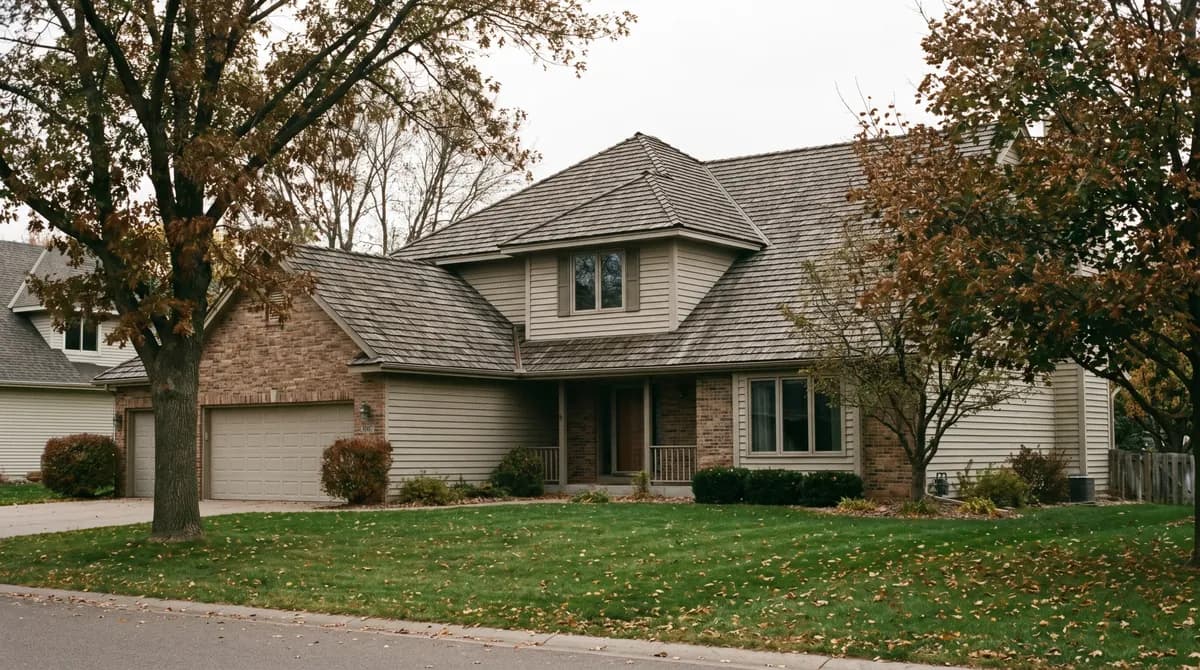
Lebanon Hills and Hawthorne are full of homes from the 1980s and 1990s buildout — good neighborhoods, well-maintained, but roofs from that era are right at the edge of their rated lifespan. Whether you replace now or get a few more years out of what you have, a professional inspection gives you a clear picture before the next Dakota County winter makes the decision for you.
About Apple Valley, MN
Apple Valley is a Dakota County suburb of approximately 55,000 residents situated about 15 miles south of downtown Minneapolis along the I-35E corridor. The city grew from open farmland through several decades of rapid suburban expansion — population surged through the 1960s, 1970s, 1980s, and 1990s before stabilizing in the 2000s as buildable land ran out. That growth arc left Apple Valley with a housing stock concentrated in a roughly 40-year window, which has consequences for roofing: homes built in the 1970s through early 2000s are now at or approaching the end of their original shingle life. The city's character is set — it is not adding large subdivisions or changing dramatically — and the households who have been here for two and three decades are maintaining properties that were bought new and have aged steadily since.
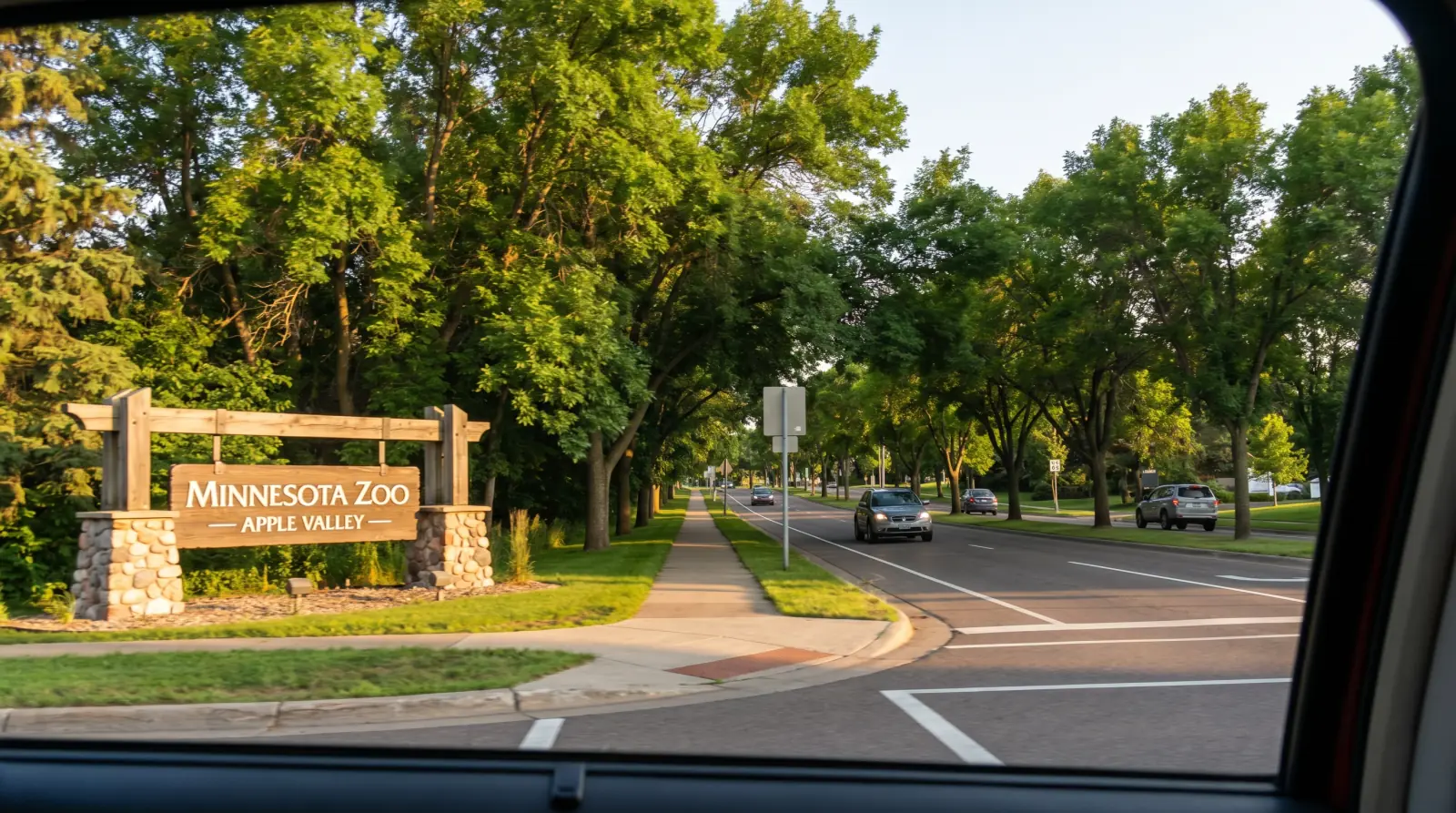
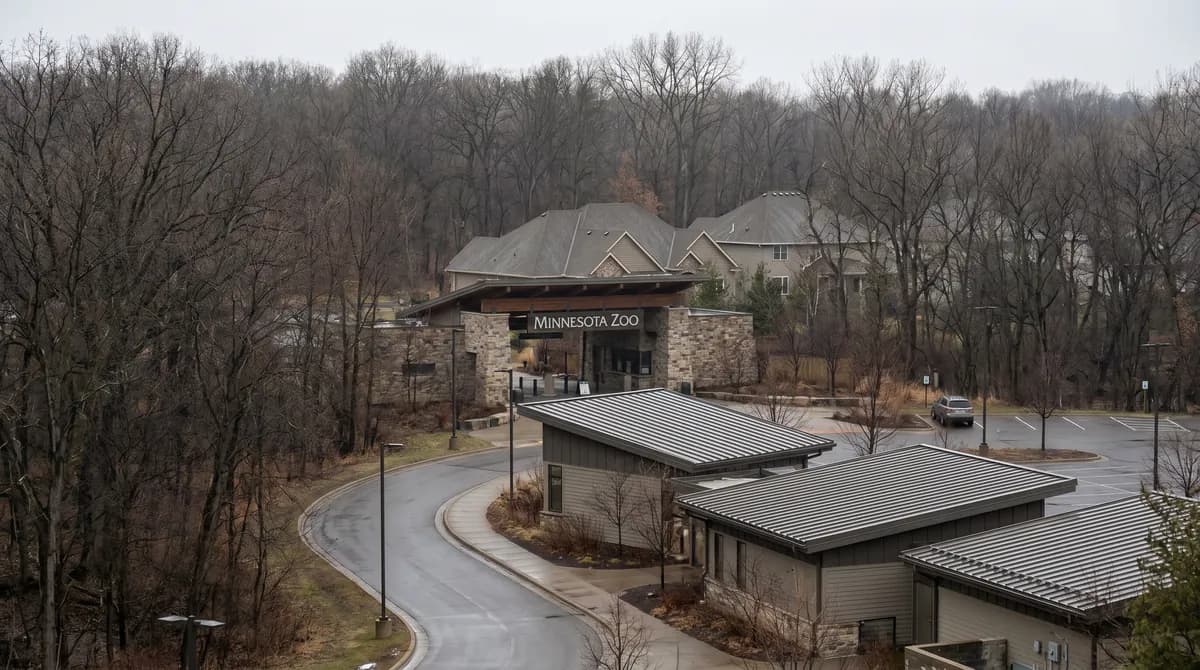
The Minnesota Zoo anchors Apple Valley's identity in a way few civic institutions can match. With more than 4,500 animals across 485 acres, the zoo draws over a million visitors annually and sits along Johnny Cake Ridge Road just north of the Lebanon Hills Regional Park boundary — a pairing of cultural and natural assets that gives the city a feel more spacious than its population density would suggest. Lebanon Hills itself adds roughly 2,000 acres of wetlands, forest, and rolling terrain within city limits, including a dedicated off-leash dog area and a swimming lake that draws residents from across the southern metro. The I-35E and County Road 42 corridor carries the commercial weight of the city — box retail, medical, and service businesses concentrated along that spine while the residential neighborhoods spread east and west into quieter streets.
Neighborhoods like Lebanon Hills, Hawthorne, and Cobblestones have housed the same families for twenty and thirty years, which breeds a practical, maintenance-minded homeowner outlook. Apple Valley residents are not given to excess — median household incomes run above $99,000, but the community spends carefully. When someone calls us from an Apple Valley address, they have usually done their homework and want a contractor who will level with them about what the roof actually needs, not push the largest possible scope.
Housing stock and market
Apple Valley's housing stock reflects its growth arc directly. The oldest neighborhoods — those built in the late 1960s and early 1970s along the western edge of the city — carry split-level and rambler designs common to that era, with shallow roof pitches that accumulate snow and shed it slowly. Homes built through the 1980s introduced more colonial and two-story designs with steeper pitches, but original ventilation systems in those houses were rarely designed to prevent ice damming — the energy codes and insulation standards of that decade did not require it. Homes from the 1990s and early 2000s are better insulated but now old enough that original architectural shingles, which carry a 25- to 30-year design life under typical Minnesota conditions, are reaching the end of their useful span.
Median home values in Apple Valley stabilized in the $380,000 to $410,000 range through 2024 and into 2025. The market here does not move with the same volatility as closer-in neighborhoods — Apple Valley is a known quantity, the schools are consistent, the commute to the metro is manageable — which means owners treat roof replacement as a capital decision rather than an emergency. The typical homeowner we work with in Apple Valley has been watching the roof for a year or two before calling, has noted some granule loss in the gutters, and wants a straight answer about whether they are past the repair threshold. Most of the time, when a 1985 or 1992 Apple Valley roof has visible granule loss and multiple cycle-cracked tabs, the honest answer is replacement.
Townhome and attached-housing clusters in the city add a different set of project considerations — shared association ownership means our estimates often go before a board before work begins. We are accustomed to that process and can provide documentation in whatever format the association requires.
Weather and roof realities
Apple Valley carries the full Dakota County winter load. Average annual snowfall runs around 45 inches, and the season extends from November well into March in most years. Freeze-thaw cycles are the primary driver of ice dam formation — temperatures cross the 32-degree line repeatedly through January and February, which is the condition that turns attic heat loss into structural water infiltration. When insulation depth is inadequate or soffit-to-ridge airflow is blocked, the roof deck warms above freezing while the eave overhang stays cold. Snow melt runs down the slope, hits that cold overhang, and refreezes. As the dam builds, standing water backs up behind it and finds any weakness in the envelope — a failed flashing joint, an under-run ice-and-water-shield termination, an unsealed nail penetration. The split-level and rambler designs common in Apple Valley's older neighborhoods have low pitches that hold snow longer and eave geometries that concentrate ice dam formation at the most vulnerable point in the drainage path.
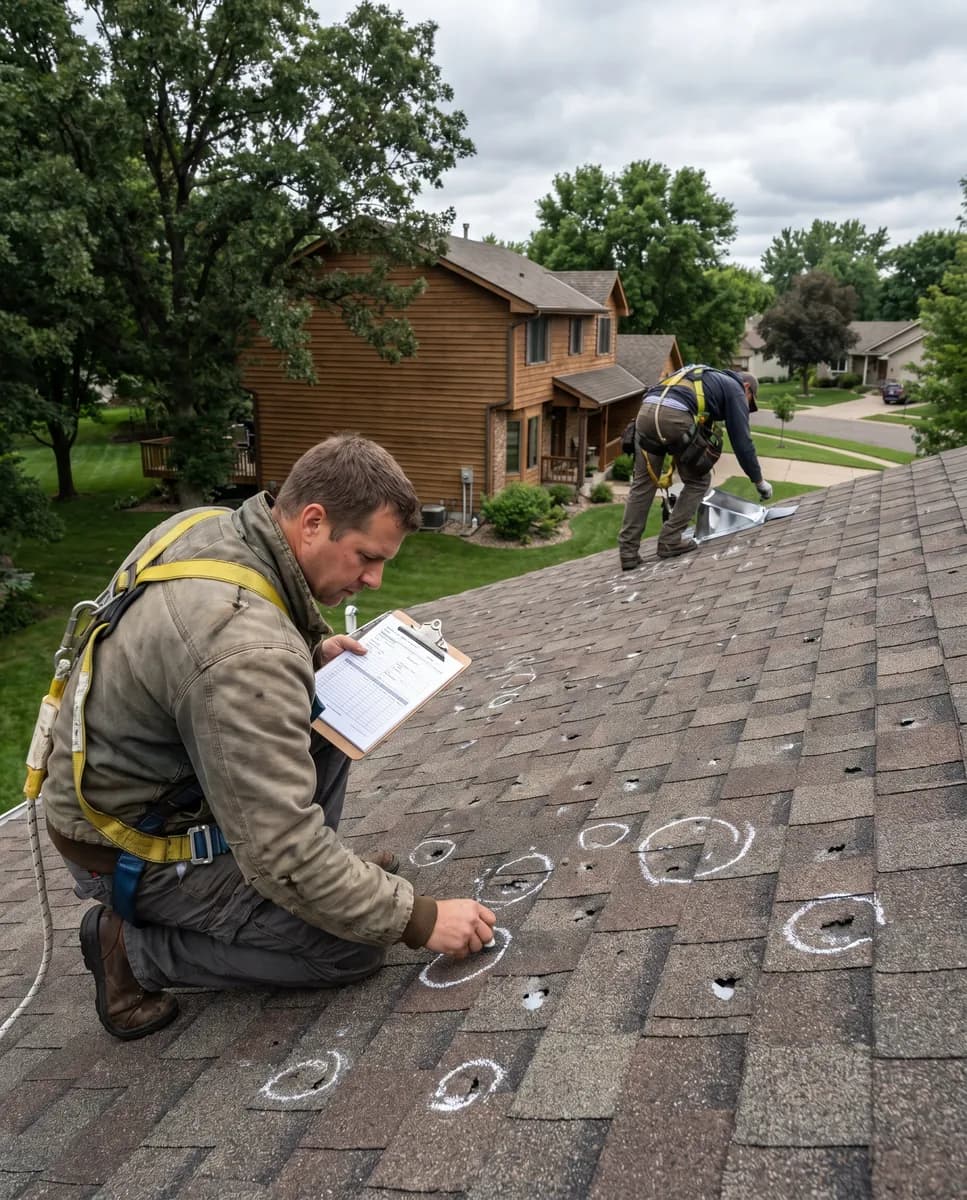
Summer storm exposure in Dakota County is significant. Apple Valley has recorded over 130 hail events near the city boundary since 2004, a rate that reflects the southern metro corridor's position in the storm track that crosses Minnesota from the southwest. Half-dollar-sized hailstones hit the area in 2025, and the June 2025 outbreak produced tornado threats across southern Dakota County — the same system that brought damaging wind gusts above 70 mph to communities along the I-35E and MN-77 corridors. Hail at that size hits asphalt shingles hard enough to bruise the mat beneath the granule layer without punching through, which means the damage is invisible from the ground. A roof that looks intact from the street can have sustained hail bruising across the entire field that will accelerate deterioration and reduce the remaining service life by five years or more.
Impact-resistant Class 4 shingles are worth specifying on any Apple Valley replacement for two reasons: they perform measurably better in subsequent hail events, and they qualify for homeowners insurance discounts in Minnesota that can offset a portion of the upgrade cost over the policy life. For Apple Valley homeowners who experienced the 2025 hail events, we provide written post-storm inspections with photo documentation suitable for insurance claim submission at no charge before any contract is signed. We attend adjuster inspections to make sure the initial damage assessment reflects what is actually on the roof, not just what is visible from a quick walk-around.
Residential Services
Roofing services in Apple Valley
We offer the full residential menu from our Central Minnesota base — the same crew, the same standards, across all 43 Minnesota cities we serve.
Replacement in Apple Valley
Full residential roof replacement with architectural shingles, metal, or specialty…
Replacement in Apple Valley→Repair in Apple Valley
Targeted roof repairs for Minnesota homes and cabins — leak diagnosis, flashing re…
Repair in Apple Valley→Storm Damage in Apple Valley
Hail and wind damage assessment, insurance claim support, and full restoration for…
Storm Damage in Apple Valley→Get in Touch
Contact Silver Loon Roofing — Apple Valley
- Serving
- Apple Valley, MN (Dakota County)
- Phone
- (970) 555-0199
- Hours
- Mon–Fri 7 am – 6 pm
Sat 8 am – 2 pm
Dispatched from our Central Minnesota home office along the Rum River
Nearby areas we serve from Apple Valley
- Burnsville
- Eagan
- Lakeville
- Rosemount
- Farmington
Need roofing work in a nearby town? Request a free estimate — we cover the surrounding area without a travel surcharge.
Common Questions
Frequently asked questions — Apple Valley
Ready for a straight-talk roof estimate in Apple Valley?
We inspect, document, and give you a written line-item estimate before any work starts. No pressure, no surprises.