Roofing in Crosslake, MN
Whitefish Chain · Crow Wing County
Silver Loon covers Crosslake (Crow Wing County): roof replacement, repair, storm damage, and ice dams. Based in Central Minnesota.
The June 2024 supercell produced multiple tornadoes near Crosslake and dropped 2-inch hailstones across the Whitefish Chain communities. For cabin owners who were not on-site when that storm hit — which describes most seasonal properties on the Chain — the damage sat undocumented through the rest of the summer and into winter. If your property has not had a professional inspection since that event, you may not know what you have.
The Whitefish Chain is seasonal-use country, and the roofing questions here are different from a primary residence. A cabin that sits empty from Labor Day through Memorial Day accumulates a full Minnesota winter of snow load, ice dam pressure, and freeze-thaw cycling with no one on-site to notice early warning signs. We do spring opening inspections for cabin owners who want a professional set of eyes before the summer begins — and we document with photographs so owners who are not local have a clear record of what was found.
About Crosslake, MN
Crosslake sits at the heart of the Whitefish Chain of Lakes — 14 connected lakes spanning 37 square miles in Crow Wing County, with more than 121 miles of shoreline winding through pine and birch forest. The town takes its name from Cross Lake, the central link in the chain, which historically connected the fishing camps that became the permanent settlement. About 2,400 full-time residents call Crosslake home, but that number understates the actual population in any given summer week, when seasonal owners open cabins and lake homes that account for roughly 60 percent of the area's 2,477 housing units. The boutique main street, the public water access points, and the Saturday morning farmer's market all run at a different scale in July than in February — it is a town that knows its character and builds around it.
The Crosslake Historic Log Village, a cluster of eight preserved 19th- and early 20th-century log structures across from the Pine River Dam, is the clearest physical link to the area's origins. The village includes the original saloon, schoolhouse, livery, and general store — weathered log construction that survived decades of Minnesota winters because the builders understood what the climate asked of materials. The Pine River Dam, just downstream, marks the outflow from Cross Lake and has been a local orientation point since the logging era. MN-66 runs through the community and connects Crosslake to Brainerd to the west and Nisswa to the south, making the town accessible without stripping away the off-the-main-highway quality that lake-country buyers still look for.
The community has grown steadily at roughly 1.3 percent annually over the past two decades, driven primarily by retirees and remote workers who traded metro proximity for lake access. That demographic shift has pushed construction quality upward — newer lake homes on the Whitefish Chain are designed and finished at a level that reflects what their owners spent to be here, and the roofing decisions on those properties follow the same logic.
Housing stock and market
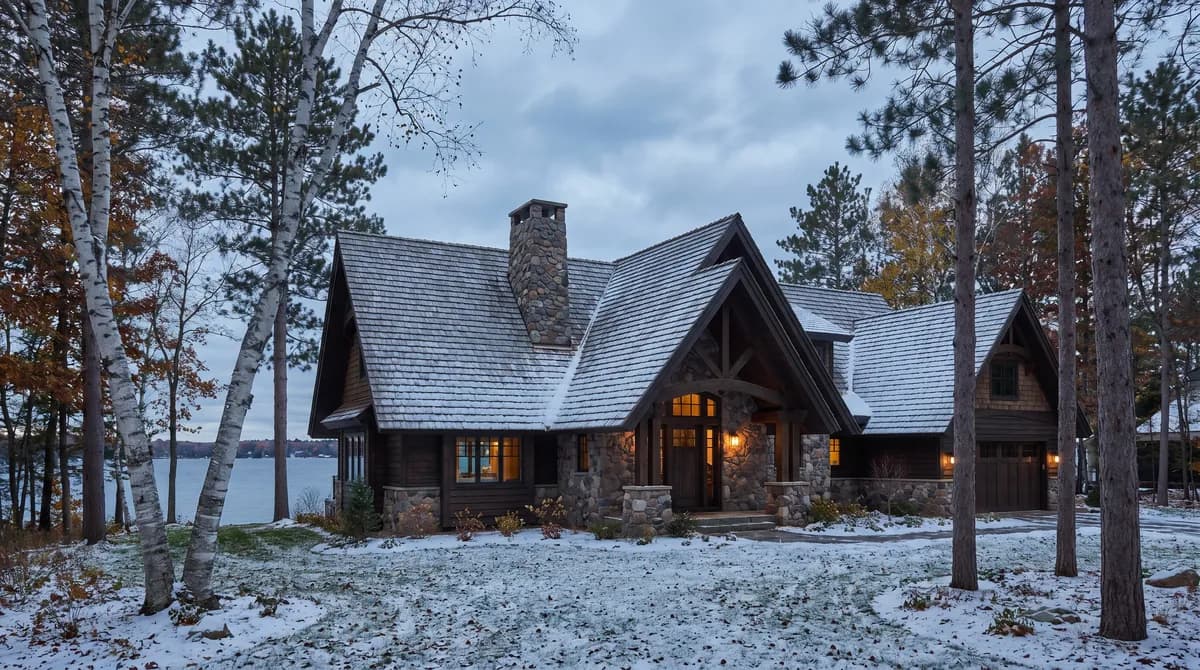
The Whitefish Chain's housing stock divides more sharply than almost any other market we serve. On one end: original 1950s and 1960s fishing cabins — modest structures on tight lots with low-pitch roofs, minimal attic depth, and original asphalt shingles that have been through 50 or 60 Minnesota winters. On the other: $500,000 to $3 million lake homes built in the last 15 years with steep-pitch designs, standing-seam metal or cedar shake roofing, and architectural details that match what the shoreline view is worth to the owner. Both ends of that spectrum are common on the Chain, sometimes on adjacent lots, and both require roofing contractors who can read the material and spec accordingly rather than defaulting to one approach.
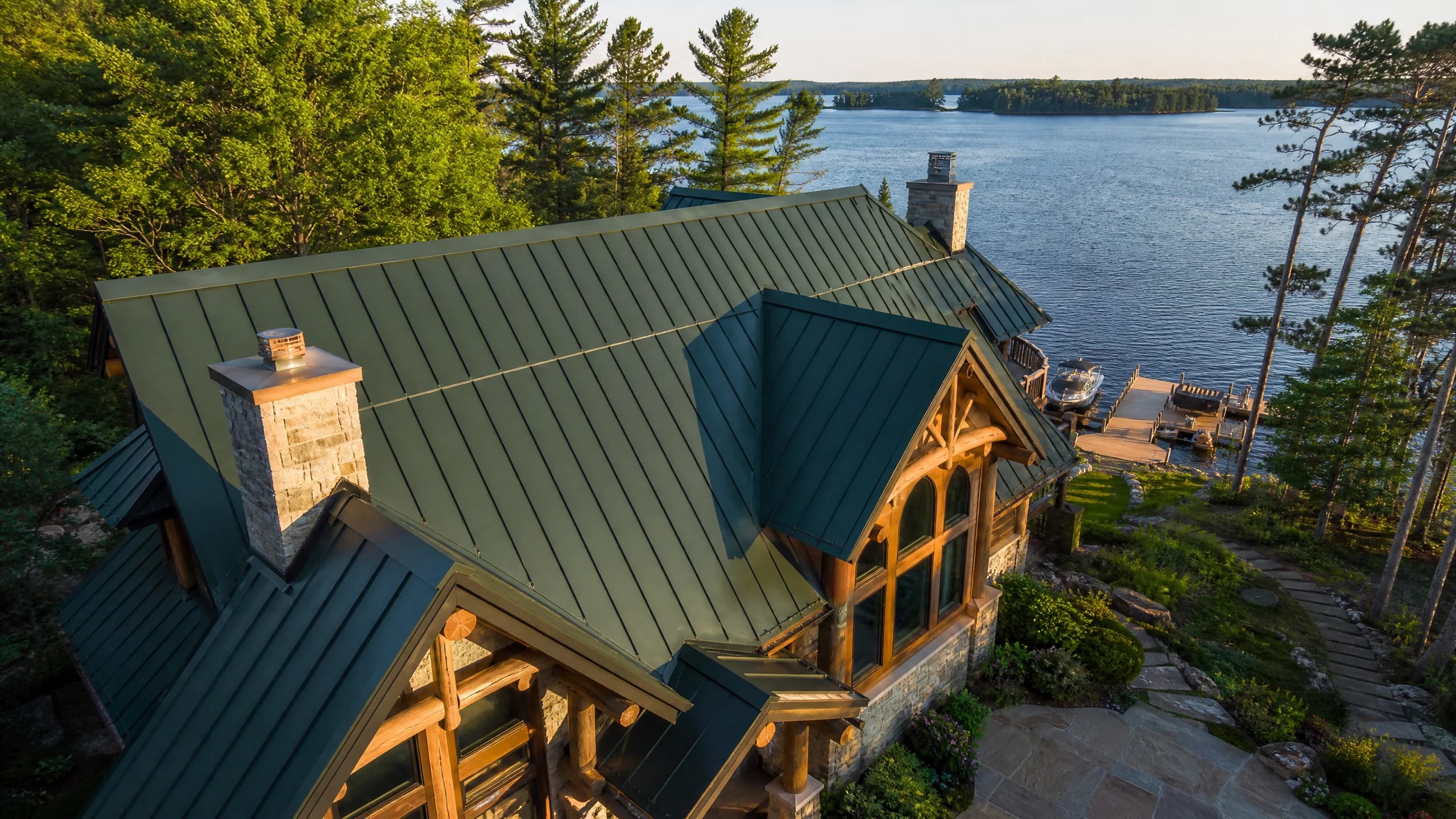
Standing-seam metal has become the dominant choice for new construction and full replacements on higher-value Whitefish Chain properties. The material's longevity — 40 to 60 years with minimal maintenance — appeals to owners who are not on-site year-round and cannot easily monitor condition. Cedar shake remains in wide use on properties built before 2000, and many owners choose to match it on replacement for aesthetic consistency and to protect the character that drives the property's value. Both materials carry higher installation costs and insurance implications than standard asphalt shingles, and both require contractors who understand how they perform under Crow Wing County winters specifically — not generically.
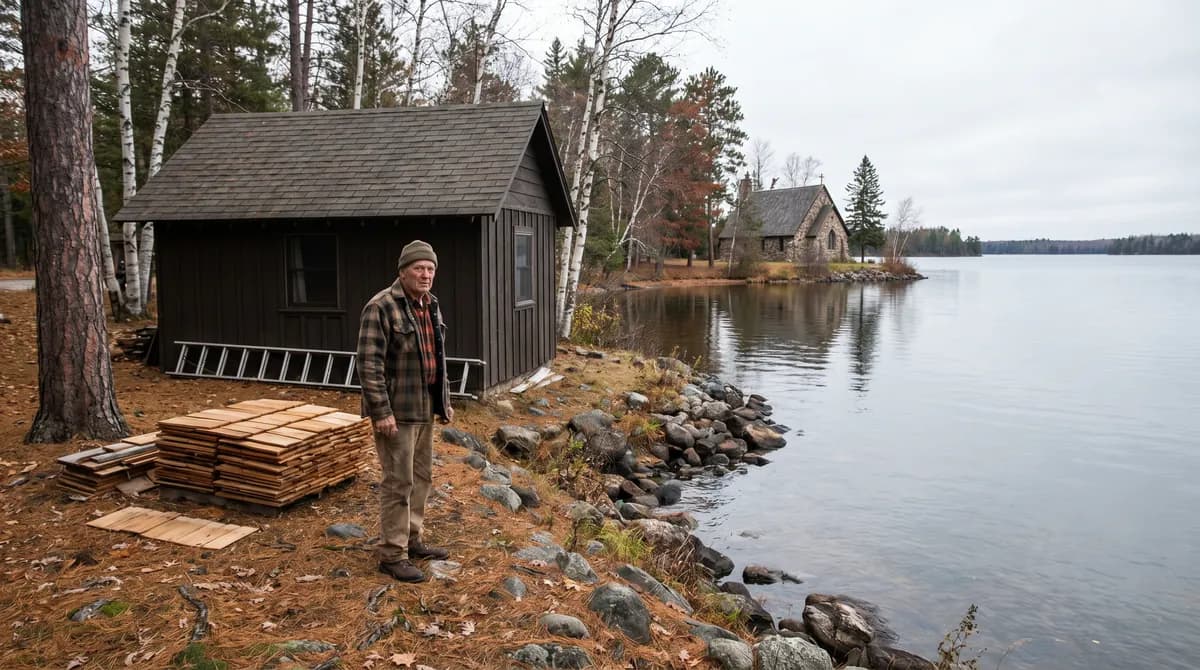
The seasonal-use reality adds its own layer. A cabin occupied only from Memorial Day through Labor Day accumulates a full Minnesota winter's worth of snow load, ice dam pressure, and freeze-thaw cycling with no one on-site to notice early warning signs. By the time owners arrive in May for spring opening, a small problem from the previous November has had five months to become a large one. We schedule inspections at season opening for cabin owners who want a professional set of eyes on the roof before the summer begins — and we document with photographs at every stage so owners who are not local have a clear record of what was found and what was done.
Weather and roof realities on the Whitefish Chain
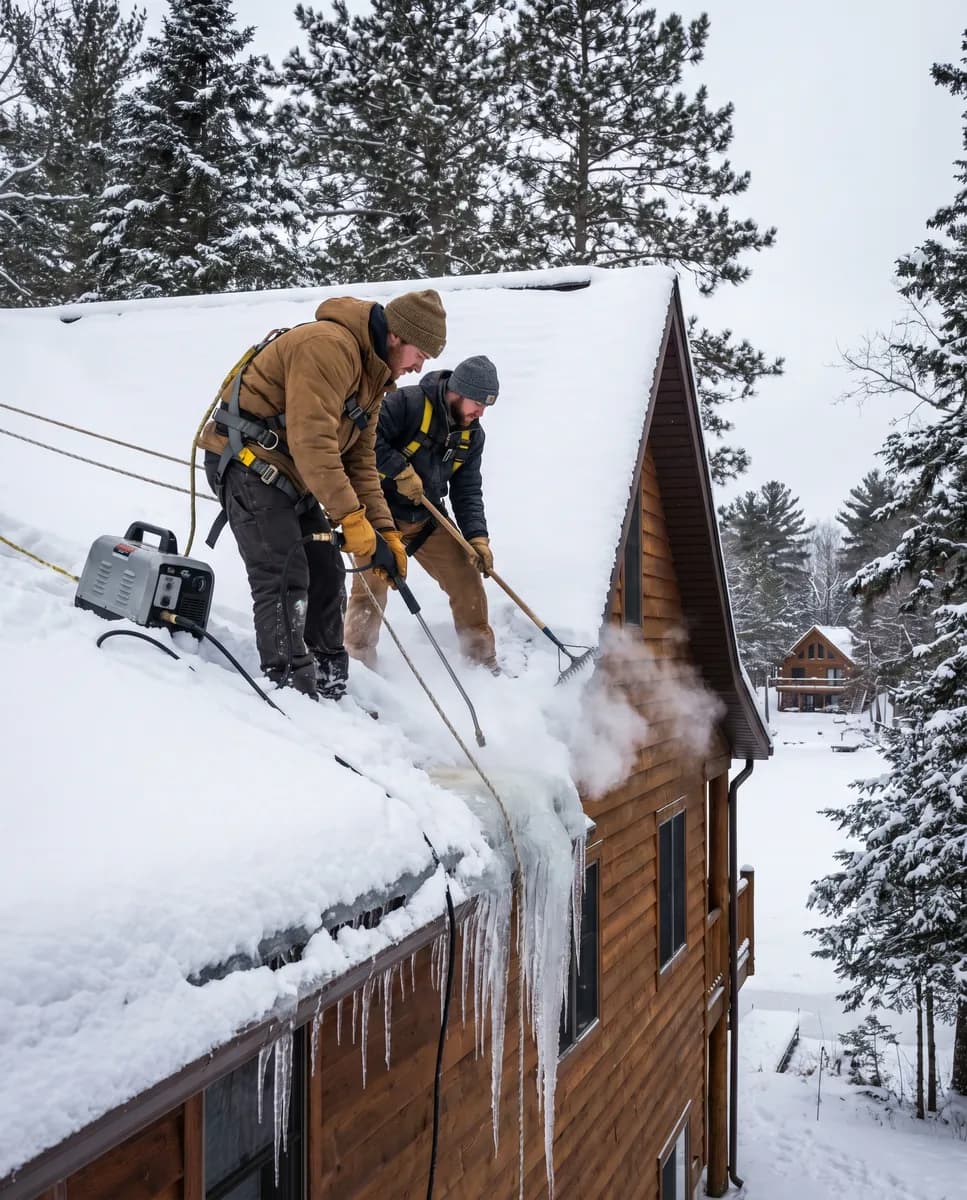
Crosslake averages 34 inches of annual snowfall — less than the Twin Cities in total accumulation, but delivered in conditions that create more persistent roof stress. Average January lows run near 0°F, frost depths reach 60 inches or more in hard winters, and the freeze-thaw cycles that drive ice dam formation are concentrated through December, January, and February. On year-round homes where interior heat escapes through an under-insulated attic deck, snow on the upper roof surface melts, runs down the slope, and hits the cold eave overhang — where it refreezes into a dam. Water backs up behind the dam and works into any gap it can find: a step flashing that has shifted at a dormer, an ice-and-water shield that terminates short of the warm wall line, an unsealed nail penetration in the valley. Seasonal cabins present a different ice problem: without interior heat, the roof stays cold, preventing the classic dam cycle, but spring thaw can produce high-volume melt that overwhelms ice-and-water shield that was not sized for the actual eave width.
The Whitefish Chain sits in a storm corridor that runs northeast through Crow Wing County from late May through August. Hail up to 2 inches in diameter has been recorded at Crosslake campgrounds — hailstones that size hit asphalt shingles at velocities the granule layer cannot absorb without bruising or cracking the mat underneath. A June 2024 supercell produced multiple tornadoes near Crosslake, making it one of the more significant severe weather events the area has seen in recent years. Wind gusts during strong summer cells regularly exceed 60 mph; the tree canopy around lake properties concentrates debris impact and increases the risk of limb strikes on roof surfaces. After any significant storm, we can inspect within one to two business days, document every affected surface before the adjuster arrives, and provide a written scope the insurer can match against our estimate without a second visit.
Insurance on Whitefish Chain properties — particularly second homes and seasonal cabins — requires more documentation than a standard primary residence claim. Some policies include occupancy clauses that limit storm claim eligibility during unoccupied periods; others apply separate deductibles for wind versus hail damage. On a $300,000 standing-seam metal roof, the difference between a well-documented claim and a poorly documented one can be tens of thousands of dollars. We photograph the damage pattern before anyone touches the roof, note wind direction evidence in how debris and granule loss are distributed, and are present at the adjuster inspection to make sure nothing is undervalued or left out of the scope. That process matters more on high-value lake properties than anywhere else we work, and we handle it the same way regardless of project size. Permit pulls go through Crow Wing County; we handle the paperwork end-to-end so owners who are not local do not have to deal with the process from a distance.


Residential Services
Roofing services in Crosslake
We offer the full residential menu from our Central Minnesota base — the same crew, the same standards, across all 43 Minnesota cities we serve.
Replacement in Crosslake
Full residential roof replacement with architectural shingles, metal, or specialty…
Replacement in Crosslake→Repair in Crosslake
Targeted roof repairs for Minnesota homes and cabins — leak diagnosis, flashing re…
Repair in Crosslake→Storm Damage in Crosslake
Hail and wind damage assessment, insurance claim support, and full restoration for…
Storm Damage in Crosslake→Get in Touch
Contact Silver Loon Roofing — Crosslake
- Serving
- Crosslake, MN (Crow Wing County)
- Phone
- (970) 555-0199
- Hours
- Mon–Fri 7 am – 6 pm
Sat 8 am – 2 pm
Dispatched from our Central Minnesota home office along the Rum River
Nearby areas we serve from Crosslake
- Pequot Lakes
- Ideal
- Chicken
- Jenkins
- Fifty Lakes
Need roofing work in a nearby town? Request a free estimate — we cover the surrounding area without a travel surcharge.
Common Questions
Frequently asked questions — Crosslake
Ready for a straight-talk roof estimate in Crosslake?
We inspect, document, and give you a written line-item estimate before any work starts. No pressure, no surprises.