
Roofing in Duluth, MN
Duluth roofing — hillside homes to the Lake Superior shore
Silver Loon covers Duluth (St. Louis County): roof replacement, repair, storm damage, and ice dams. Based in Central Minnesota.
Duluth gets 86 inches of annual snowfall — nearly double the Twin Cities average — and lake-effect events off Lake Superior can drop another foot in a single day. That load, stacked on top of November wind gusts that have reached 50 mph or more off the lake, tests roofs in ways that do not apply anywhere else in Minnesota. If your home is on the hillside above Canal Park or in one of the established neighborhoods along the East End, the roof conditions here are different in degree from what a standard metro contractor accounts for when specifying materials or writing a scope.
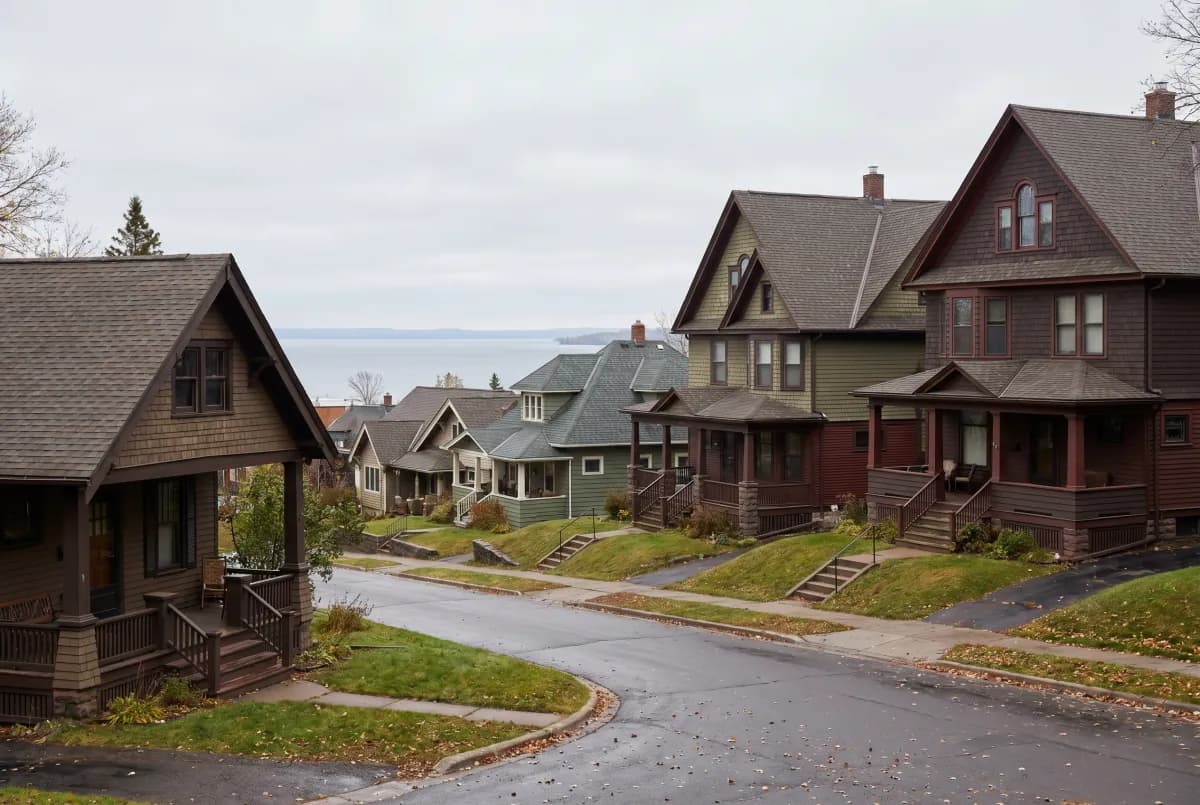
Steep pitches are common on Duluth's older housing stock — Victorian-era and craftsman homes built when steep meant the snow would shed rather than accumulate. But a steep pitch also means more wind-exposed surface on the face, more complex flashing at dormers and valleys, and setup time on any job that a low-pitch ranch does not require. Those factors show up in how a job is scoped and how long it takes.
About Duluth, MN
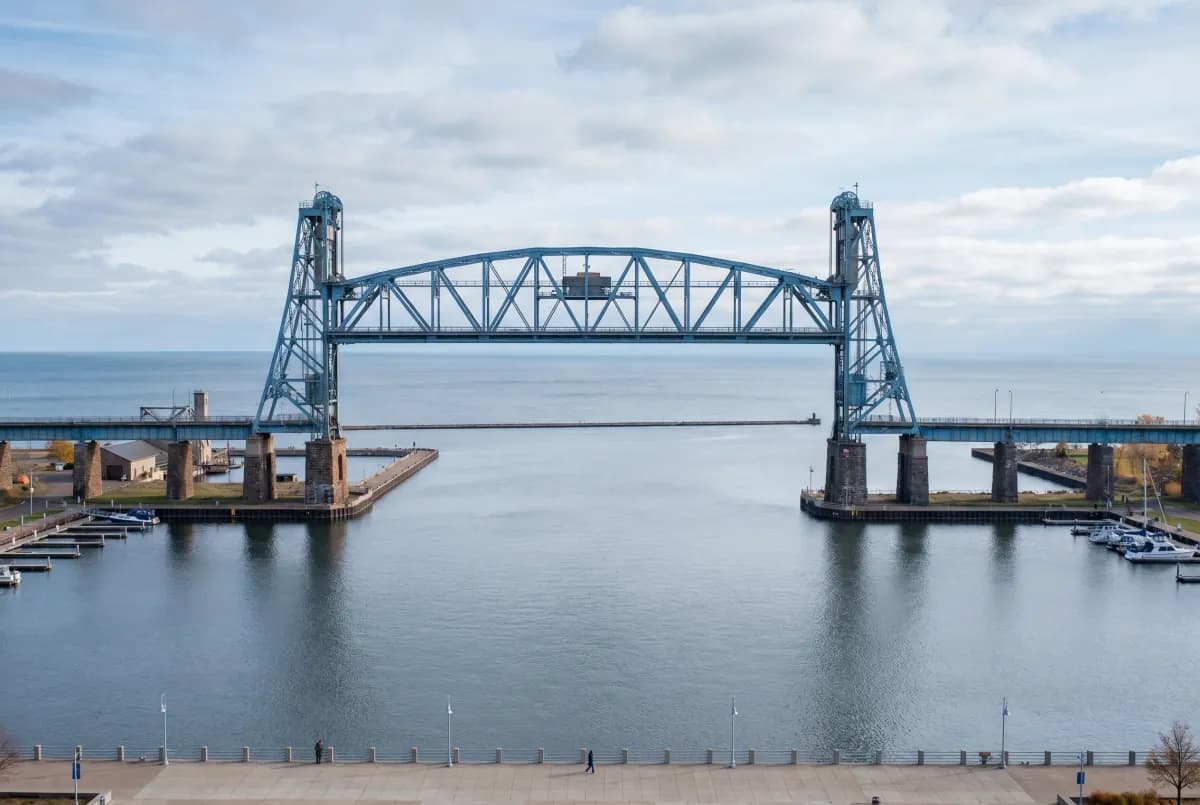
Duluth sits at the western tip of Lake Superior in St. Louis County, a city of roughly 88,000 built up a 600-foot ridge above one of the world's largest freshwater harbors. The waterfront identity is defined by Canal Park and the Aerial Lift Bridge — the 1905 landmark that raises 138 feet to let ore boats and container ships pass through the shipping canal. Glensheen Mansion, the 39-room Congdon estate built in 1908 on the lake shore, anchors the East End neighborhood and gives a sense of what the city looked like at the height of the iron ore and timber economy. Spirit Mountain ski area sits on the southwestern ridge above the city. Enger Tower, a 1939 stone observation tower, marks the high point of the hillside above the harbor.
The city climbs from the harbor level through a series of hillside neighborhoods — Congdon, Chester Park, Lincoln Park, Endion, Kenwood — each with its own character but sharing the same steep street grid and the same exposure to Lake Superior weather. The hillside geography concentrates wind and moisture in ways that matter for roofing. Neighborhoods on the upper ridge see sustained gusts that neighborhoods a few blocks downhill partially avoid. Lake-effect precipitation hits the western end of the lake harder than most weather models predict, and the temperature differential between the lake surface and the air above it keeps the lake effect active well into November and December.
Duluth's economy has diversified well past its iron range and shipping roots. The University of Minnesota Duluth, Essentia Health, St. Luke's, and the tourism economy driven by Canal Park and the North Shore all contribute. The city draws a mix of long-term residents with deep roots and newcomers drawn by outdoor access — hiking the Superior Hiking Trail, paddling the Boundary Waters, skiing Spirit Mountain. That blend produces a homeowner population that is practical about maintenance and expects contractors to be direct about what they find.
Housing stock and market
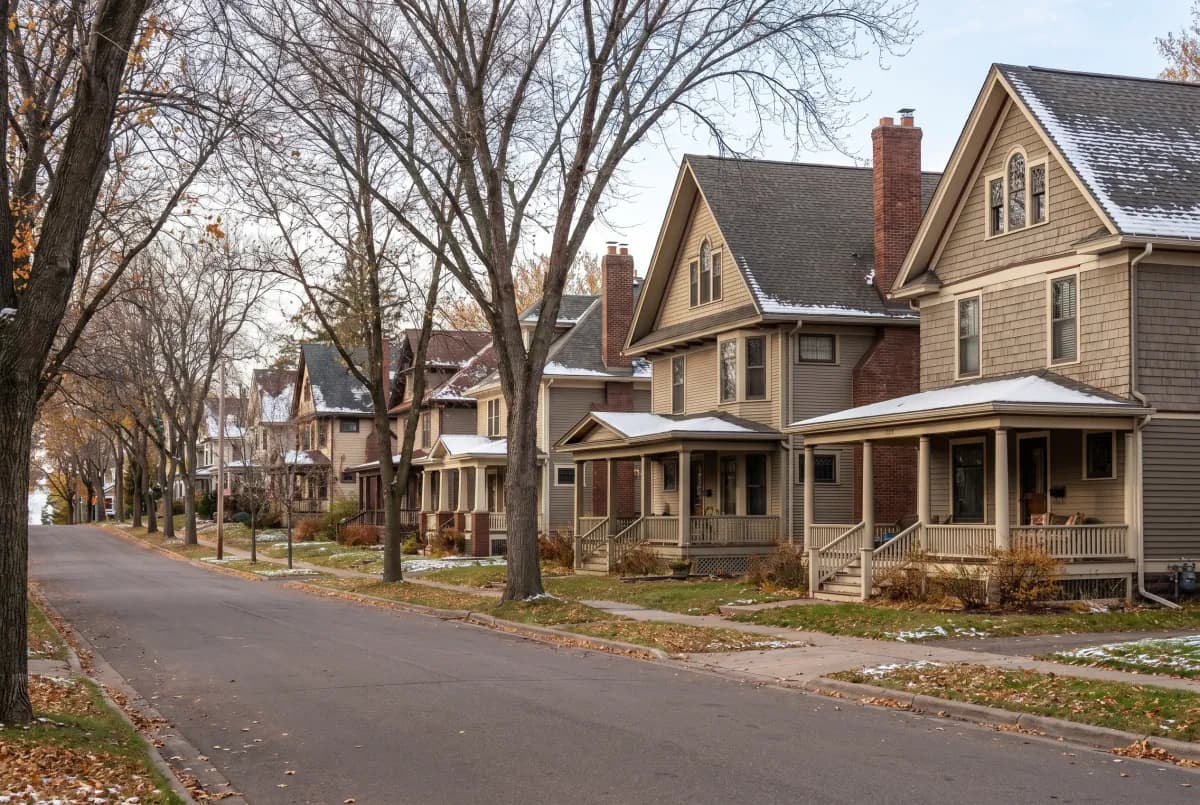
Duluth's housing stock is older than most Minnesota cities its size. The neighborhoods nearest the waterfront and the hillside core — Congdon, Chester Park, Lincoln Park — carry Victorian-era homes, craftsman bungalows, and four-squares built between 1890 and 1930. These homes were built with steep pitches that shed snow, but with attic assemblies that predate modern insulation standards by decades. Heat loss through those older attic floors is higher than in any post-2000 construction, which drives ice dam formation even on homes with steep roofs. The rooflines often include dormers, complex valleys, and decorative trim elements that require careful flashing work on replacement.
Mid-century construction expanded the city outward on the upper hillside from the 1940s through the 1970s, adding more modest two-story homes and ramblers on lots carved into the ridge. These homes have less architectural complexity than the Victorian stock but carry the same weather exposure and often have attic insulation from the original build that falls short of current Minnesota code. The newest residential development has occurred primarily on the city's western edges and in the Hermantown corridor just outside the city limits.
Median home values in Duluth range from $190,000 to $280,000 depending on neighborhood and condition, lower than the Twin Cities metro but reflecting real value in a city with full municipal services and direct access to Lake Superior and the North Shore. Waterfront and hillside properties near Congdon and the East End command higher prices. On any home at replacement cost, a neglected roof represents real deferred maintenance. Duluth homeowners tend to understand that better than most — the weather here does not allow the illusion that maintenance can wait another season.
Weather and roof realities in Duluth
The 86-inch annual snowfall average does not fully capture what Duluth roofs carry. Lake Superior stores summer heat and releases it through fall and early winter, keeping lake surface temperatures above air temperature long enough to trigger lake-effect snow events that can drop 20 inches in a single day on the western end of the lake. Frost penetrates deeper and stays later into spring than anywhere else in Minnesota's populated south. The ice dam season runs from November through April in hard winters — a month longer on each end than the Twin Cities average. Any home where attic heat escapes through the deck rather than exiting through the ridge vent is a candidate for ice dam formation across that full window. On Duluth's older housing stock with original attic assemblies, that condition is close to universal.
Lake Superior wind off the water is a distinct hazard from November through January. Sustained gusts of 40 to 50 mph are common during lake-effect events; recorded peaks have exceeded that during November storms when the temperature differential between lake and air is greatest. Wind load on a hillside home above the harbor is not the same as wind load on a flat-terrain suburban house. Hip roofs with sealed ridge caps handle uplift better than gable ends on steep pitches. Standing seam metal, where the pitch and budget support it, eliminates the individual tab failure mode entirely and carries no granule layer to lose. On any Duluth replacement where the structure can support the weight, it is worth putting in the estimate as an option.
Hail is less frequent in Duluth than in the Twin Cities storm corridor, but it does reach St. Louis County in spring and summer. The larger and more consistent seasonal risk is wind-driven snow load and ice formation. Every Silver Loon estimate for a Duluth hillside home includes an attic insulation and ventilation assessment. We look at insulation depth at the eave, whether baffles are in place to maintain an unobstructed air channel from soffit to ridge, and whether any previous attic work has blocked the ventilation path. Steep pitches add setup time to any Duluth job — safety rigging requirements on roofs above 8/12 are different from a standard suburban job. We account for that in the written estimate upfront, not as a change order after we are already on the roof. Permits run through the City of Duluth Building Services Division and are included in your estimate at the actual permit cost.
Residential Services
Roofing services in Duluth
We offer the full residential menu from our Central Minnesota base — the same crew, the same standards, across all 43 Minnesota cities we serve.
Replacement in Duluth
Full residential roof replacement with architectural shingles, metal, or specialty…
Replacement in Duluth→Repair in Duluth
Targeted roof repairs for Minnesota homes and cabins — leak diagnosis, flashing re…
Repair in Duluth→Storm Damage in Duluth
Hail and wind damage assessment, insurance claim support, and full restoration for…
Storm Damage in Duluth→Get in Touch
Contact Silver Loon Roofing — Duluth
- Serving
- Duluth, MN (St. Louis County)
- Phone
- (970) 555-0199
- Hours
- Mon–Fri 7 am – 6 pm
Sat 8 am – 2 pm
Dispatched from our Central Minnesota home office along the Rum River
Nearby areas we serve from Duluth
- Hermantown
- Proctor
- Two Harbors
- Cloquet
- Superior
- Carlton
Need roofing work in a nearby town? Request a free estimate — we cover the surrounding area without a travel surcharge.
Common Questions
Frequently asked questions — Duluth
Ready for a straight-talk roof estimate in Duluth?
We inspect, document, and give you a written line-item estimate before any work starts. No pressure, no surprises.