
Roofing in Eden Prairie, MN
Eden Prairie roofing — southwest metro neighborhoods, written estimates, solid work.
Silver Loon covers Eden Prairie (Hennepin County): roof replacement, repair, storm damage, and ice dams. Based in Central Minnesota.
The June 2025 storms brought golf-ball hail and tornado warnings to Hennepin County, and Eden Prairie was in the path. Homeowners near Bryant Lake and along the bluff neighborhoods saw real storm activity that season — the kind that leaves impact marks the granule layer absorbs without showing obvious exterior damage. An inspection in the first few weeks after a storm like that is the difference between a documented claim and a denied one.
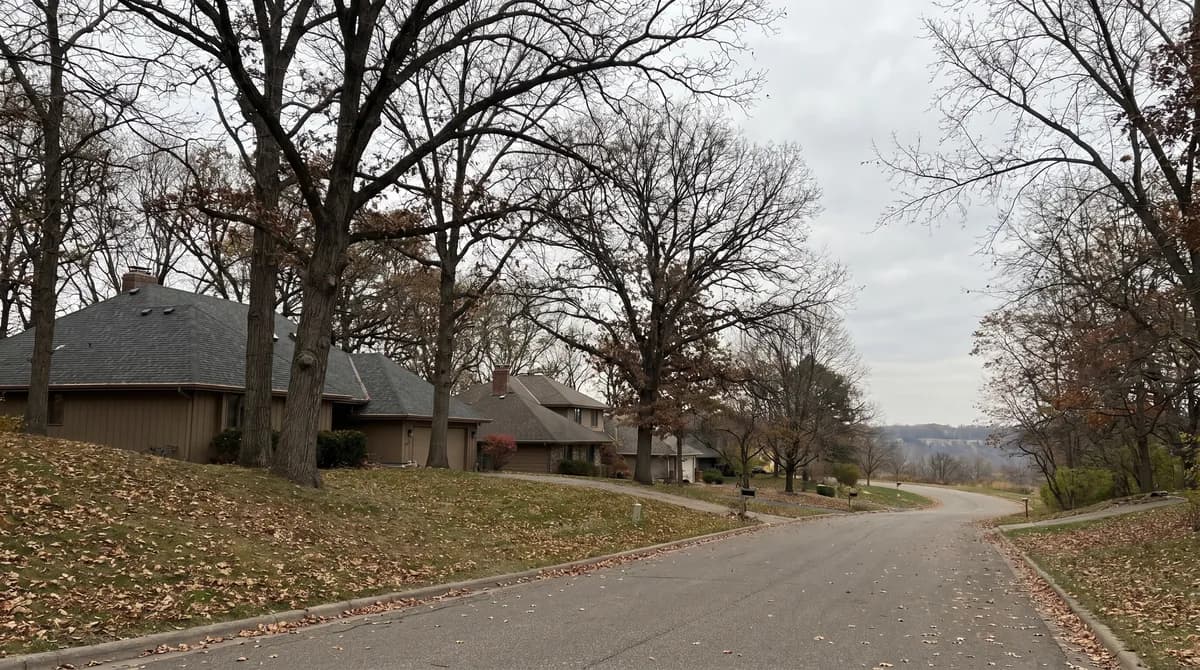
Eden Prairie built fast through the 1970s and 1980s, and those homes are now deep into the inspection window. The Flying Red Horse sign on Highway 212 has been a local landmark since before most of those neighborhoods existed — and the roofs on those properties have been absorbing Minnesota weather just as long. If yours is in that vintage, it is worth knowing what it still has left.
About Eden Prairie, MN
Eden Prairie is a southwest metro suburb of roughly 63,000 residents in Hennepin County, sitting between the Minnesota River valley to the south and I-494 to the north, with Highway 5 and Flying Cloud Drive threading the city's commercial and residential fabric together. The city grew from open farmland and orchard land after 1960, building outward through the 1970s, 1980s, and 1990s as corporate campuses attracted employers and families followed. Optum and Starkey Hearing Technologies anchor the employment base today, and CH Robinson's logistics operations and a former SuperValu distribution presence reflect the city's deep ties to freight and supply chain industries — the kind of corporate infrastructure that generates a resident workforce with real purchasing power and homes worth protecting carefully.
The parks system is one of the things Eden Prairie residents point to first. More than 170 miles of trails connect 2,250 acres of parkland, with Bryant Lake Regional Park and Staring Lake Park among the most-used green spaces in the city. Bryant Lake, tucked west of the I-494 and Highway 62 interchange, draws paddlers and trail users year-round. Staring Lake, near the Southwest Station light rail corridor, anchors an outdoor amphitheater and open-water swimming area that becomes a neighborhood gathering point from June through August. Flying Cloud Airport — a general aviation field along the Minnesota River — gives the city an unusual character for a suburb this far into the metro, with small aircraft visible on final approach above the river bluffs most fair-weather days. The Flying Red Horse Sign on Flying Cloud Drive, a restored 1930s Mobil neon Pegasus standing 12 feet tall and 16 feet wide, has become the city's most recognized visual marker — visible to pilots entering the pattern and to drivers who know the story behind the glowing red horse that has stood in various locations around the Twin Cities since the 1930s.
The population peaked above 64,000 around 2020 and has settled into a stable band since, with very limited new residential land available inside the city limits. That means the housing stock is largely set: what was built between 1970 and 2000 is what Eden Prairie is, and those homes are now between 25 and 55 years old. That age bracket matters for roofing decisions more than almost any other factor.
Housing stock and market
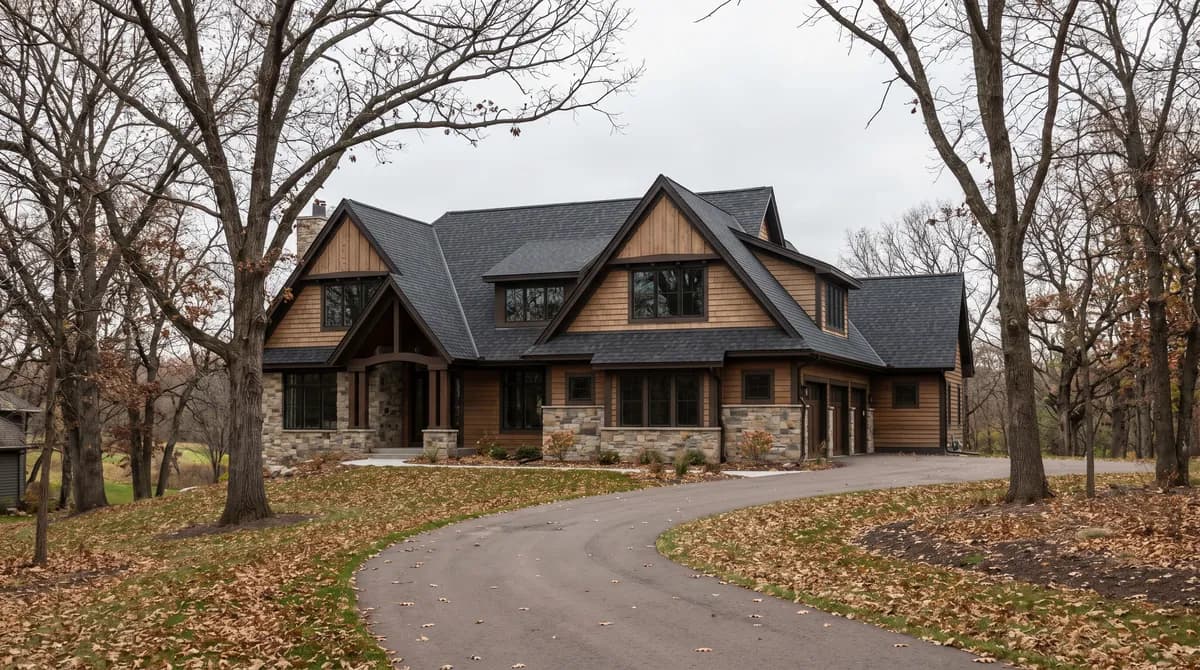
Eden Prairie's neighborhoods were built in waves that are visible in the rooflines. The 1970s developments — particularly the established areas north of Highway 5 and near the Round Lake and Neill Lake corridors — brought two-story colonials and split-levels on generously sized lots, many with attached garages and pitched roofs in the 6:12 to 8:12 range. The 1980s added more complex plans: multi-gable profiles, extended dormers, hip ridges that join at awkward angles, and deeper eave overhangs that were a design preference of the era but create specific ice dam exposure points when attic insulation never kept up with evolving energy codes. The 1990s builds pushed further south, closer to the Minnesota River bluffs and the Flying Cloud corridor, with custom and semi-custom homes on larger lots that carry steeper pitches and more valley runs.
Median home values in Eden Prairie ran between $480,000 and $530,000 through 2024 and into 2025 — meaningfully above the Hennepin County median and well above what you would find for comparable square footage in the outer metro. That value concentration is relevant to roofing choices: a homeowner with a $500,000 home and a 25-year-old original roof is not well served by a budget shingle that will need replacement in 12 years. Most Eden Prairie homeowners we work with are making one more roofing decision on a home they intend to keep or sell at a strong price — the material conversation matters, and we have it every time.
A significant share of the 1980s and 1990s construction used builder-grade three-tab shingles that were already past their designed service life by the time the 2025 storm season arrived. Attic insulation in those homes was typically installed to the standard of the original energy code — well below what Minnesota now recommends — and has often settled or been disturbed by HVAC or electrical work in the years since. That combination of aged shingles and compromised attic thermal performance is the exact profile that produces ice dam damage in January and shingle failure after the first meaningful hail event of the season.
Weather and roof realities
Eden Prairie sits in the southwest metro where storm tracks entering the Twin Cities from the southwest arrive with full energy before any urban terrain moderates them. The city averages 45 to 50 inches of annual snowfall, and winter temperatures cross the 32-degree line repeatedly through January and February — sometimes multiple crossings in a single day during the transitional cold spells that characterize a Minnesota continental climate. That freeze-thaw rhythm is what drives ice dam formation on roofs where attic heat escapes through the deck. When the deck warms above freezing while the eave overhang stays cold, snow melt runs to the edge and refreezes into a dam. Water backs up behind it under pressure, and it will find any gap — a flashing joint that moved with thermal cycling, an unsealed nail penetration, a short ice-and-water-shield termination that stops at the exterior wall line instead of extending to the warm plane of the attic. On a 1980s two-story with original attic insulation, this happens in most meaningful snow years.
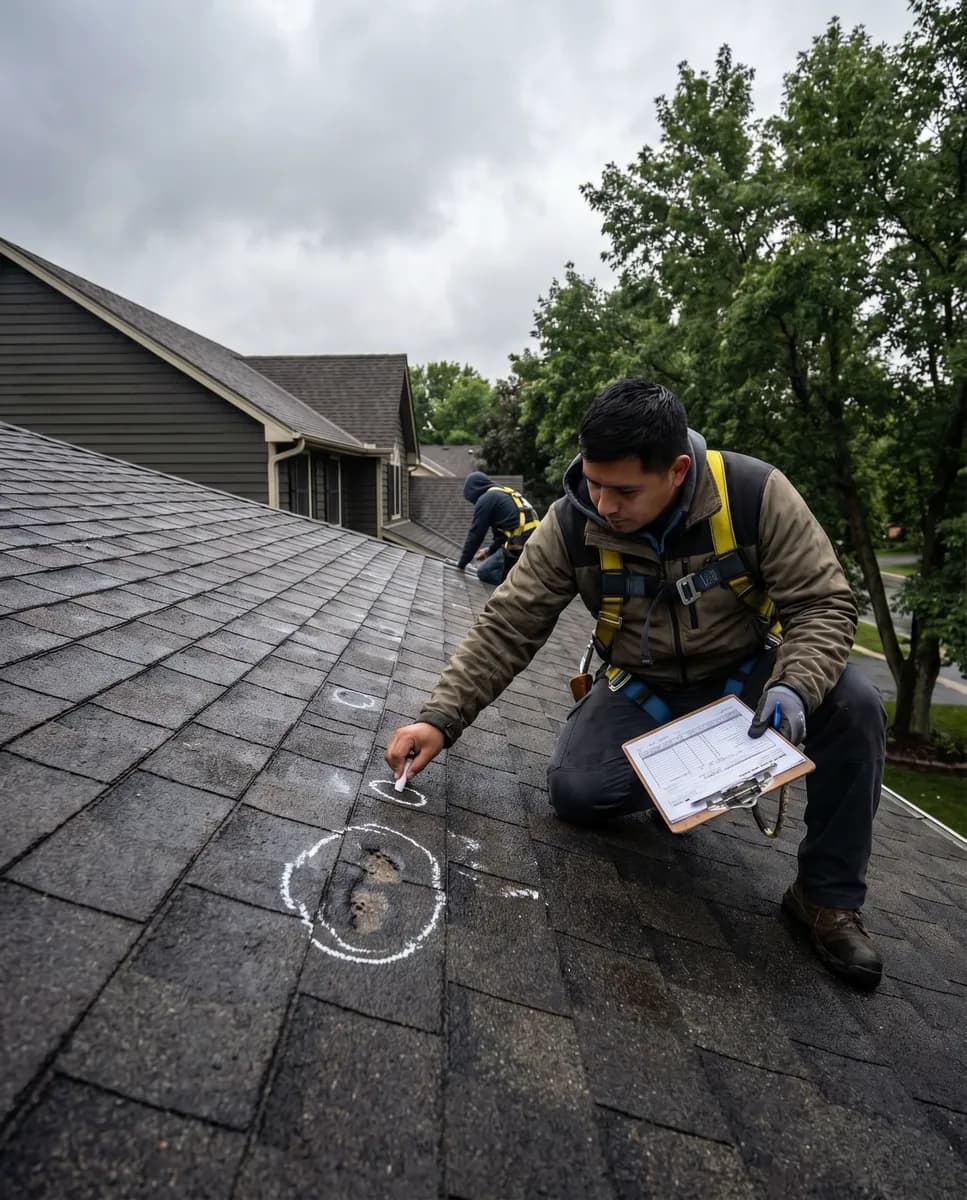
Summer brings organized severe weather from the southwest that reaches Eden Prairie before it reaches the core metro neighborhoods. The 2025 severe thunderstorm season produced golf ball-sized hail and tornado warnings directly over the city. Golf ball hail — roughly 1.75 inches in diameter — hits asphalt shingles at speeds the granule layer cannot absorb cleanly. The result is mat bruising and granule displacement that accelerates UV degradation but does not create a visible puncture from the ground. Many Eden Prairie homeowners walked their property after the 2025 events, saw no obvious damage, and did not pursue an inspection. The damage is there on those roofs. High winds accompanying the same storm systems regularly exceed 60 to 70 mph across the I-494 corridor, and the Minnesota River valley can channel wind differently than the flat terrain a mile north, meaning homes near the bluff edge and Flying Cloud Drive see peak gusts that do not always appear in the official weather station records.
For any Eden Prairie homeowner who has not had a professional inspection since the 2025 storm season: the inspection is free before any contract is signed, takes 45 minutes, and produces written photo documentation suitable for an insurance claim submission. We attend adjuster inspections when you file a claim, so the adjuster and the contractor are looking at the same evidence at the same time. Impact-resistant Class 4 shingles are worth specifying on any Eden Prairie replacement — the protection carries through subsequent storm seasons, and Minnesota homeowners insurance discounts for Class 4 material are meaningful enough to reduce the effective cost of the upgrade over a 10-year window.
Residential Services
Roofing services in Eden Prairie
We offer the full residential menu from our Central Minnesota base — the same crew, the same standards, across all 43 Minnesota cities we serve.
Replacement in Eden Prairie
Full residential roof replacement with architectural shingles, metal, or specialty…
Replacement in Eden Prairie→Repair in Eden Prairie
Targeted roof repairs for Minnesota homes and cabins — leak diagnosis, flashing re…
Repair in Eden Prairie→Storm Damage in Eden Prairie
Hail and wind damage assessment, insurance claim support, and full restoration for…
Storm Damage in Eden Prairie→Get in Touch
Contact Silver Loon Roofing — Eden Prairie
- Serving
- Eden Prairie, MN (Hennepin County)
- Phone
- (970) 555-0199
- Hours
- Mon–Fri 7 am – 6 pm
Sat 8 am – 2 pm
Dispatched from our Central Minnesota home office along the Rum River
Nearby areas we serve from Eden Prairie
- Minnetonka
- Chaska
- Shakopee
- Bloomington
- Plymouth
Need roofing work in a nearby town? Request a free estimate — we cover the surrounding area without a travel surcharge.
Common Questions
Frequently asked questions — Eden Prairie
Ready for a straight-talk roof estimate in Eden Prairie?
We inspect, document, and give you a written line-item estimate before any work starts. No pressure, no surprises.