Roofing in Edina, MN
Edina roofing — Country Club to Arden Park, built to last.
Silver Loon covers Edina (Hennepin County): roof replacement, repair, storm damage, and ice dams. Based in Central Minnesota.
The 1981 F3 tornado that hit this part of Hennepin County is still the benchmark event for Edina homeowners who want to understand what a bad storm actually does to a roof. The 1965 outbreak before it reinforced the same lesson. Edina's country homes are not immune — and older homes in Country Club and Indian Hills carry original framing and flashing details that deserve close attention after any significant weather event.
Arden Park and the neighborhoods along Minnehaha Creek have some of the oldest housing stock in the metro, and the flashing systems on those homes — around chimneys, dormers, and sidewall transitions — are often original or close to it. If your home dates to before 1970, a flashing inspection is worth doing regardless of whether you have seen any interior signs of water. The ones that fail quietly are the ones that do the most damage.
About Edina, MN
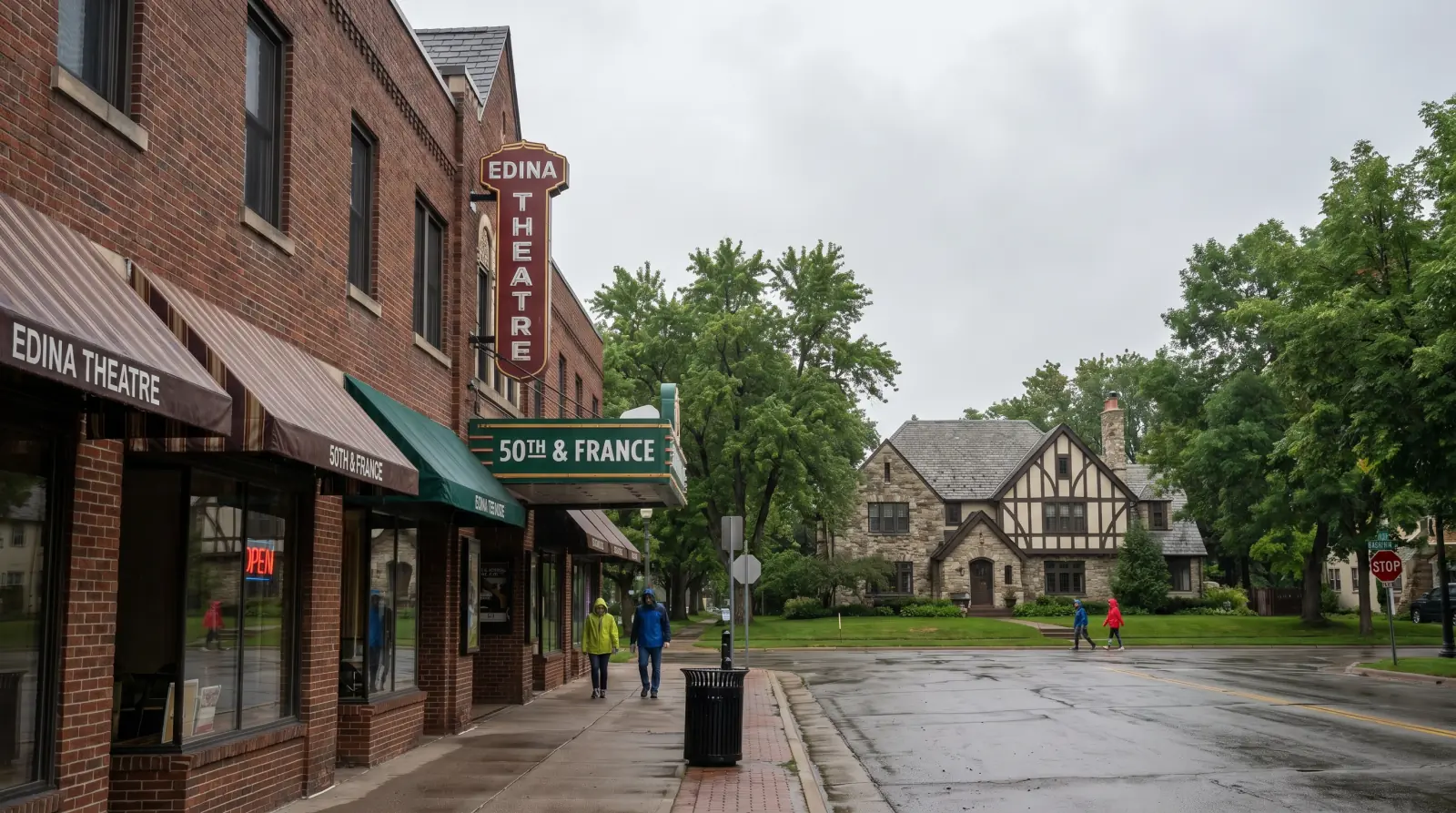
Edina is an inner-ring suburb of Minneapolis with a 2026 estimated population of 53,662, occupying a compact footprint in Hennepin County immediately south and west of the city limits. The city is bounded by Minnehaha Creek to the north and east — the same creek that runs northeast through Minneapolis and empties into the Mississippi near Minnehaha Falls — and by Nine Mile Creek to the south, a waterway that drains much of the southwestern metro and shapes the greenway corridors winding through Edina's parks. The 50th and France district, at the northwest corner of the city, is the commercial anchor: a walkable block of independent shops, restaurants, and the 1934 Art Deco Edina Theatre at 3911 West 50th Street, its original marquee sign still intact and recognized as a city heritage landmark. The district draws foot traffic from across the southwest metro and has maintained its character despite development pressure that reshaped many comparable suburban retail nodes in the 1980s and 1990s.
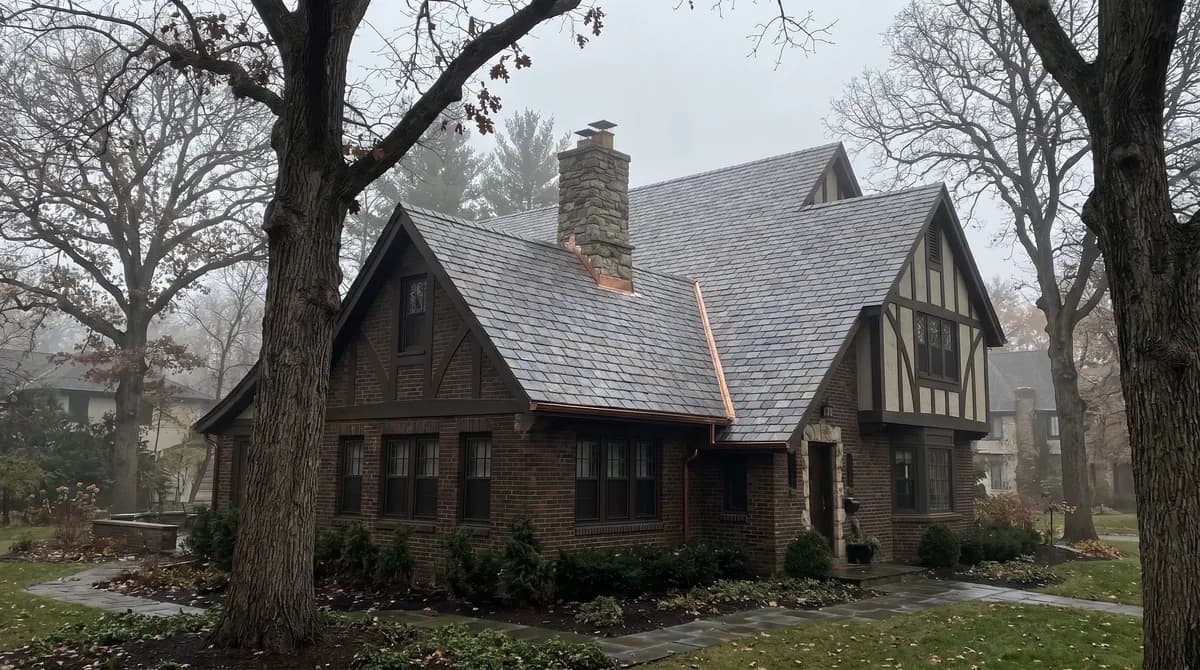
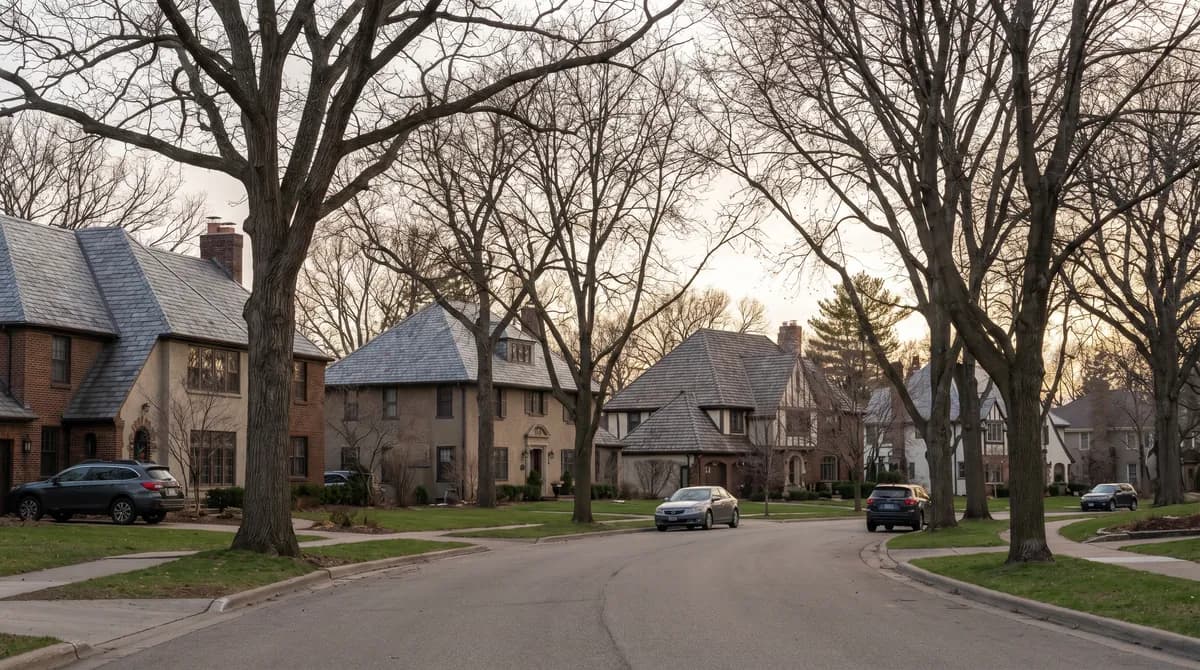
Edina's civic identity is organized around its over 45 distinct residential neighborhoods. The Country Club District, developed beginning in the 1920s, is one of the earliest planned residential communities in the state — a grid of curvilinear streets with deed restrictions that shaped the architectural character from the start. Tudor Revival and Colonial Revival homes from the 1920s and 1930s sit on lots with mature elm and oak canopy, and the neighborhood carries a density and consistency of character that is unusual for a suburb of this age. Indian Hills and Arden Park, developed in subsequent decades, brought a different sensibility: larger lots, ranch-style ramblers, and split-level homes that reflected postwar construction priorities. The city's median home value runs near $600,000, and luxury infill construction has pushed prices in the most established neighborhoods well above that figure.
Edina sits about eight miles from downtown Minneapolis via France Avenue or Xerxes Avenue South, close enough that many residents commute daily. The school district's reputation has driven consistent demand and kept turnover low in the established neighborhoods, which means the housing stock ages in place — a dynamic that matters for roofing because an older home whose owners have lived there for two or three decades is often carrying a roof that has not been systematically evaluated in years. That is not a criticism of how Edina residents maintain their properties; it is simply the arithmetic of stable ownership in a city where people stay.
Housing stock and market
The Country Club District's Tudor Revival and Colonial Revival homes present a specific set of roofing challenges. Steep pitches — often 8:12 to 12:12 — mean more safety staging and longer labor hours per square. Complex rooflines with dormers, cross-gables, and chimney penetrations multiply the number of flashing runs, and each flashing joint is a point where a failure can develop quietly over years before it surfaces as a visible interior leak. The original construction quality in these homes is generally solid, but “solid 1930s construction” still means the flashing is likely lead or early galvanized steel that has been through 80 to 90 years of Minnesota freeze-thaw cycles. We account for flashing replacement as a standard line item on any Country Club District job, not an add-on that surfaces mid-project.
The postwar ramblers in Indian Hills, Arden Park, and the neighborhoods south of Highway 62 represent a different profile. Ranch homes and 1.5-story capes from the 1950s through 1970s typically have lower pitches — 4:12 to 6:12 — and attic insulation that was installed to the code standards of the era, which fall well short of current R-49 to R-60 recommendations for Minnesota. Low-pitch roofs do not shed snow as readily as steeper profiles, and under-insulated attics create the temperature differential that drives ice dam formation every winter with meaningful snowfall. For these homes, a roofing project that does not include an attic insulation review is leaving half the problem unaddressed.
Luxury infill construction has added a third tier to Edina's housing mix in the past fifteen years. New builds and full teardown-rebuilds in established neighborhoods frequently use higher-pitch rooflines to match the character of surrounding homes, and many specify architectural shingles or standing seam metal at the outset. These homes generally carry full manufacturer warranties and need less immediate attention, but their proximity to mature tree canopy means debris accumulation in valleys and gutters is an ongoing maintenance factor worth monitoring annually.
Weather and roof realities
Edina averages 54 inches of annual snowfall — consistent with the broader southwest metro — and the freeze-thaw cycle that defines Minnesota winters arrives with particular effect on the city's older housing stock. From December through March, temperatures cross 32 degrees multiple times per week in a typical year. Attic heat escaping through a deck that has not been insulated to modern depth warms the roof surface enough to melt accumulated snow; that meltwater travels down the slope, hits the cold eave overhang, and refreezes into the ridge of ice that backs standing water up under the shingles. On a Country Club District Tudor Revival where the attic insulation has never been upgraded from its 1940s depth, ice dam formation is nearly guaranteed every winter that delivers more than a few inches of accumulation. The damage develops slowly — water finds a gap at a flashing joint or an ice-and-water-shield termination and works into the sheathing over weeks before anything shows up on a ceiling.
Heavy snow loads compound the structural stress. A wet Minnesota snowfall deposits 15 to 20 pounds per cubic foot on a roof surface. On the lower-pitch ramblers common in Indian Hills and Arden Park, snow does not shed naturally the way it does on a steep Tudor roof, so accumulation builds across the full deck area. A 1,600-square-foot ranch footprint holding 18 inches of wet snow is carrying several tons of additional load, and the structural members in a 1965 rambler were engineered to code minimums of their era, not today's. We assess snow load capacity as part of any winter damage inspection, not as a separate engagement.
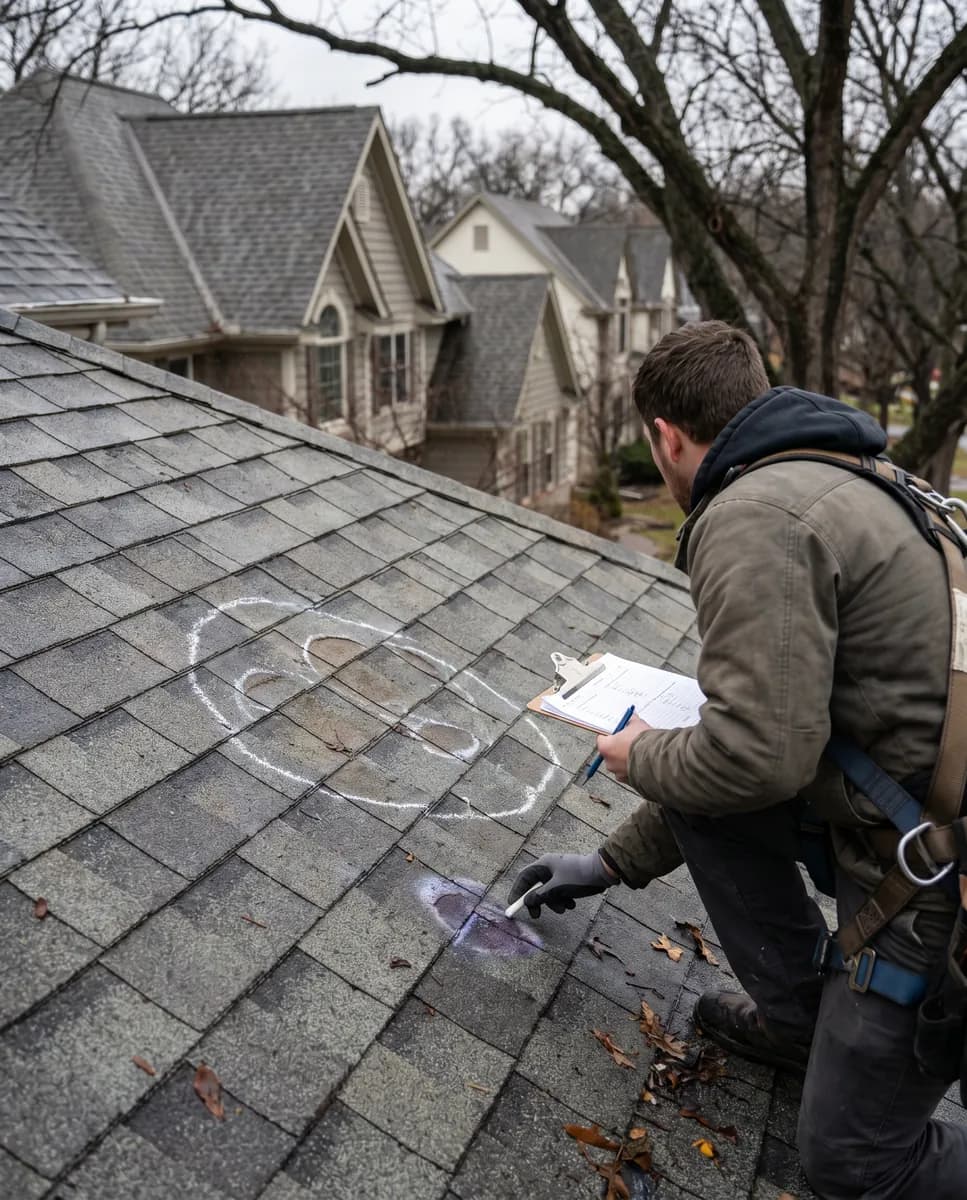
Summer brings the other half of Edina's weather story. The city lies in a corridor that has seen significant tornado events: the May 1965 outbreak — which produced tornadoes across the southwestern Twin Cities suburbs — and a destructive F3 tornado in 1981 both tracked through Edina, causing structural damage to homes across multiple neighborhoods. Beyond tornado risk, Edina sees frequent severe thunderstorm activity from late May through August, with hail the primary roof threat. Recent storm seasons have produced golf ball- sized hailstones across the southwest metro — stones that size impact asphalt shingles at speeds that bruise the fiberglass mat beneath the granule layer without necessarily punching through outright. That subsurface damage accelerates weathering and shortens effective roof life by years, but it does not show clearly from the ground. We conduct post-storm inspections on foot, walking the field and checking ridge caps, valley intersections, and the flat sections near dormers where granule loss concentrates. Written photo documentation from that inspection goes to the homeowner before any adjuster visit so nothing is undervalued in the initial claim review.
Residential Services
Roofing services in Edina
We offer the full residential menu from our Central Minnesota base — the same crew, the same standards, across all 43 Minnesota cities we serve.
Replacement in Edina
Full residential roof replacement with architectural shingles, metal, or specialty…
Replacement in Edina→Repair in Edina
Targeted roof repairs for Minnesota homes and cabins — leak diagnosis, flashing re…
Repair in Edina→Storm Damage in Edina
Hail and wind damage assessment, insurance claim support, and full restoration for…
Storm Damage in Edina→Get in Touch
Contact Silver Loon Roofing — Edina
- Serving
- Edina, MN (Hennepin County)
- Phone
- (970) 555-0199
- Hours
- Mon–Fri 7 am – 6 pm
Sat 8 am – 2 pm
Dispatched from our Central Minnesota home office along the Rum River
Nearby areas we serve from Edina
- Minneapolis
- Richfield
- Hopkins
- St. Louis Park
- Bloomington
Need roofing work in a nearby town? Request a free estimate — we cover the surrounding area without a travel surcharge.
Common Questions
Frequently asked questions — Edina
Ready for a straight-talk roof estimate in Edina?
We inspect, document, and give you a written line-item estimate before any work starts. No pressure, no surprises.