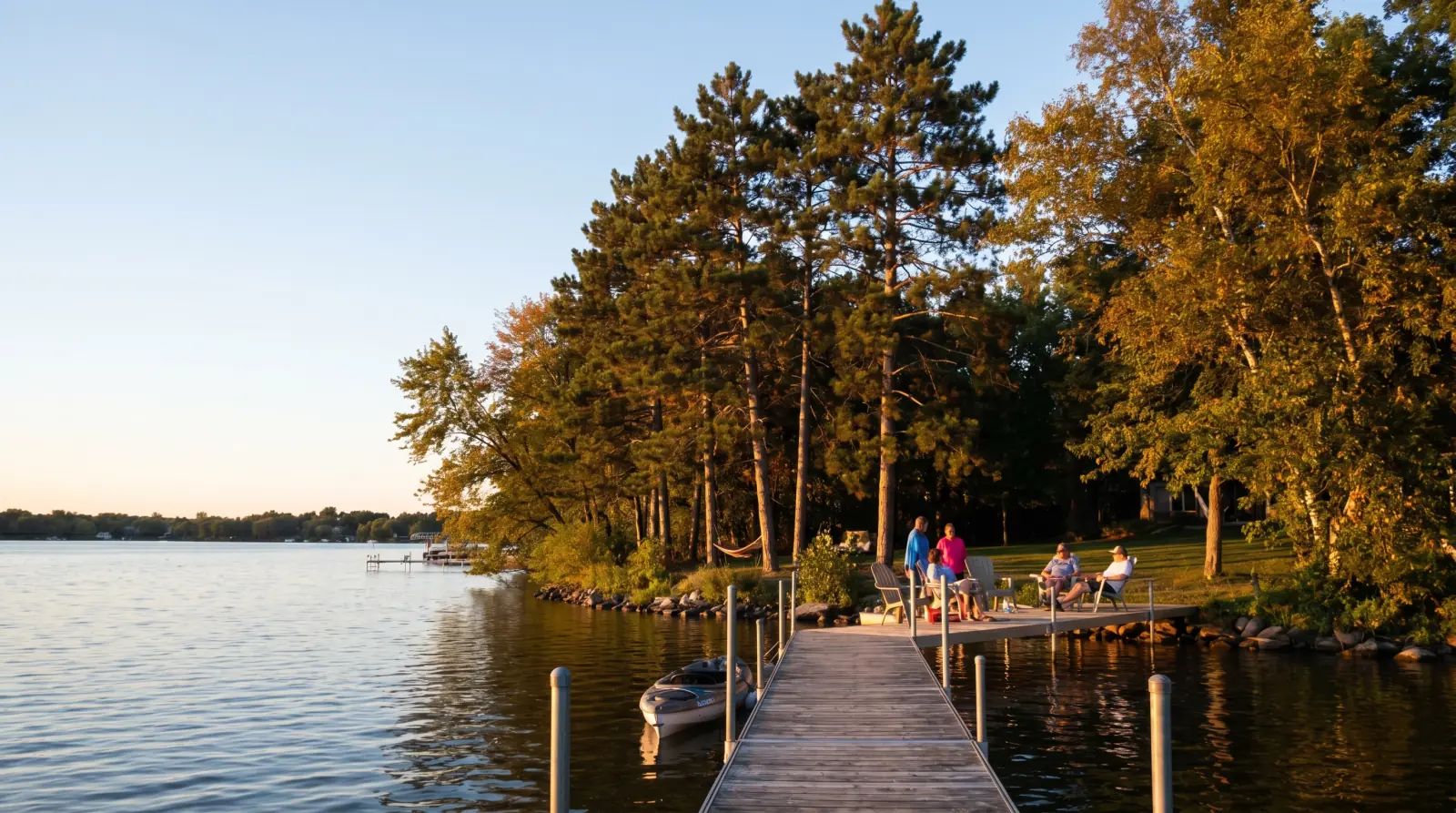
Roofing in Minnetonka, MN
Minnetonka roofing — lake country suburbs, honest estimates, clean work.
Silver Loon covers Minnetonka (Hennepin County): roof replacement, repair, storm damage, and ice dams. Based in Central Minnesota.
The June 2025 storms brought tornado warnings and golf-ball hail to the Lake Minnetonka corridor — and for homeowners on the lake-facing properties and the mid-century ranches that define much of Minnetonka's residential character, that was a direct test of roof systems that may have been running on deferred maintenance for years. If your home was in that path and no one has been on the roof since, an inspection is the practical next step.
Minnetonka's 1960s and 1970s ranches were built solid, but solid does not mean current — attic assemblies from that era typically fall well below modern insulation standards, and that gap shows up as ice dam formation in a normal January. The roof surface takes the hit, but the permanent fix involves the attic. We assess both in the same visit so you get a clear picture of what you actually need.
About Minnetonka, MN
Minnetonka is a suburban city of roughly 52,000 residents sitting west of Minneapolis in Hennepin County, built across a landscape of wooded ridges, creek corridors, and the eastern reaches of the Lake Minnetonka watershed. The city is not a single-center suburb — it developed as a loose federation of neighborhoods and former villages, and that history shows in the street grid. Minnetonka Mills, along Minnehaha Creek, was a working mill town before Minnetonka was incorporated. The Glen Lake area developed separately, as did the neighborhoods clustered near the I-394 and Highway 101 interchange that now anchor the city's commercial spine. The result is a city that feels less like a grid and more like a set of distinct residential communities connected by arterials through heavy tree canopy.
The economic weight of the western suburbs anchors Minnetonka in ways that matter for the housing market. UnitedHealth Group maintains a major campus in the city, and Cargill's headquarters sits just south in Wayzata — two of the largest private employers in Minnesota within a few miles of each other. That employment concentration keeps demand for well-maintained single-family housing steady, and median household income in Minnetonka runs above $120,000. The Minnetonka school district draws consistent attention for performance, which sustains buyer interest in neighborhoods that might otherwise age out of peak demand. The city has seen modest population decline of about four percent since 2020 — not distress, but a reflection of household size changes in an established community — while home values have continued to move upward, with single-family homes averaging $475,000 to $525,000 in 2025.
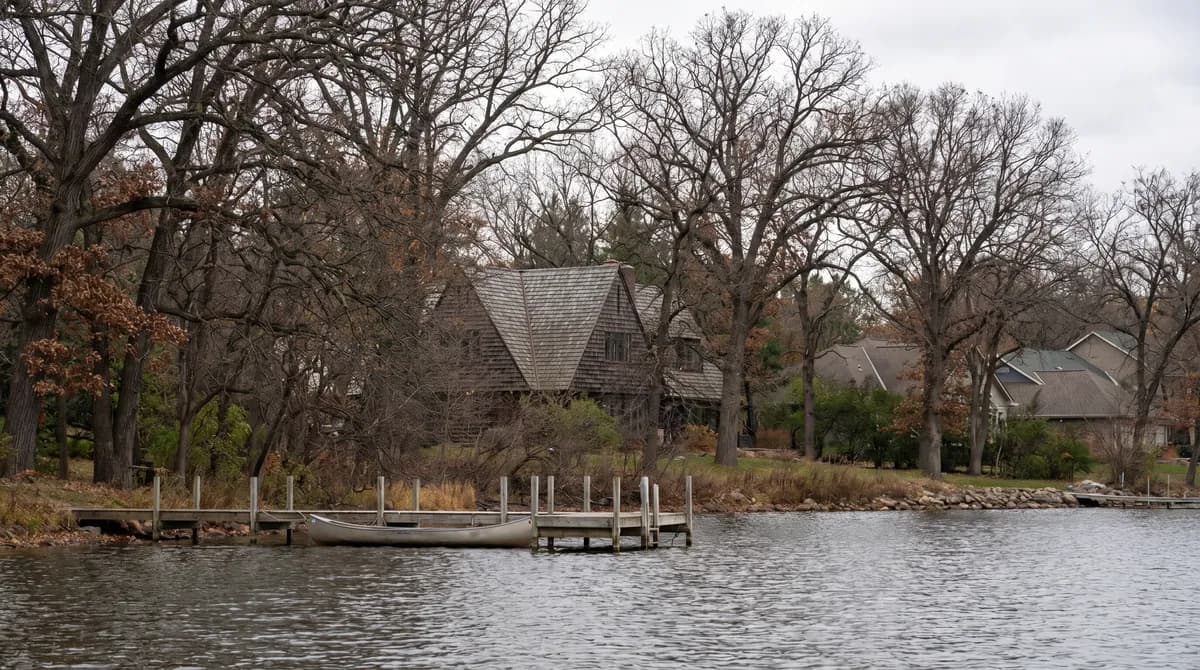
The Charles H. Burwell House stands on Minnehaha Creek as the most visible piece of the city's 19th-century history — an 1883 Italianate Victorian built in the Carpenter Gothic and Stick style by a milling manager named Charles Burwell, now listed on the National Register of Historic Places. Its ornate stickwork gables and steep rooflines against the creekside setting represent one end of Minnetonka's residential character. A mile away, a 1960s ranch on a quarter-acre lot with mature oaks overhead represents the other end. We work on both.
Housing stock and market
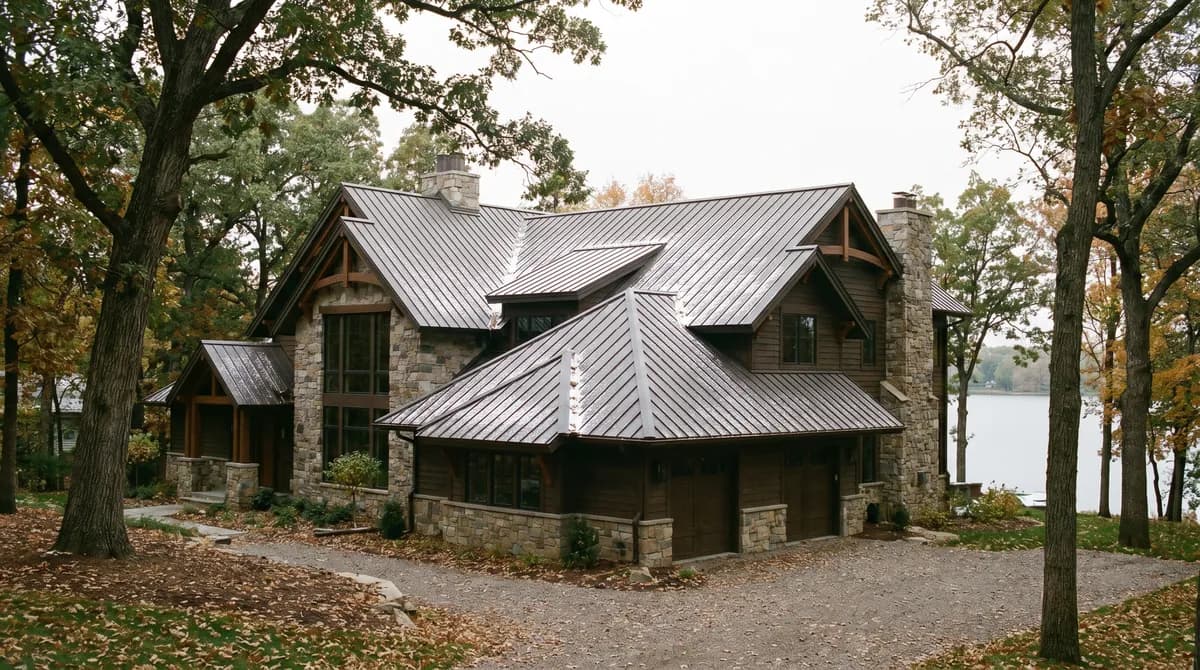
Minnetonka's housing stock is dominated by mid-century construction — the 1950s and 1960s produced most of the single-family inventory in the city's established neighborhoods. Ranch homes and split-levels built in that era sit on generous lots, often shaded by oaks and maples that were saplings when the homes were new and are now large enough to drop limbs in a thunderstorm. The housing character in those neighborhoods is durable and valued, but the attic assemblies in most of these homes were built to insulation standards that do not approach current Minnesota minimums. R-11 in the attic floor was acceptable in 1962; the current code calls for R-49 or better. That gap drives heat loss through the roof deck every winter and makes ice dams a near-certain outcome in any year with meaningful snowfall.
Newer infill construction appears throughout the city, particularly in the I-394 corridor neighborhoods where teardowns replaced smaller 1950s homes with two-story builds from the 2000s and 2010s. Those homes carry modern insulation and ventilation, but they introduce their own complications — complex rooflines with multiple valleys, dormers, and low-pitch sections over garage additions that require careful flashing detailing. Townhome and condominium development is present along commercial corridors, though the roofing market in Minnetonka is overwhelmingly single-family detached. For roofing purposes, the mid- century ranch stock is the most common job type: straightforward gable or hip geometry, asphalt shingles original or replaced once, and attic conditions that deserve evaluation every time someone is on the roof.
When a Minnetonka homeowner asks for a replacement estimate, we walk the attic before we quote. If the soffit vents are blocked by insulation batts pushed to the eave — a common condition in 1960s ranch homes — we note it and price it. A roof replacement that does not address blocked ventilation will ice-dam again the first winter. We write the ventilation work as a separate line item so the homeowner can see exactly what it costs and make an informed decision, rather than finding out about it when the leak reappears in February.
Weather and roof realities
Minnetonka averages 53 inches of annual snowfall, and the freeze-thaw cycles that make that snowfall damaging to roofs run from November into late March in most years. Temperatures cross 32 degrees multiple times per week during January and February. On a mid-century ranch with under-insulated attic space, that cycle works like this: daytime heat inside the house escapes through the attic floor and warms the roof deck; snow melts; meltwater runs down the slope to the cold eave overhang, where it refreezes. The ice dam grows with each subsequent melt cycle, backing standing water up behind it. That water finds any gap — a failed flashing joint at a valley, an unsealed nail penetration, a short ice-and-water-shield termination at the eave — and begins working into the structure. By the time the homeowner notices a stain on the ceiling, the water has usually been tracking for weeks.
Lake Minnetonka adds a moisture variable that neighborhoods further from the lake do not carry. Open water moderates air temperature near the shore and increases the moisture content of air masses moving east over the western suburbs. Homes in Shorewood or on the eastern bays of the lake accumulate drifted snow faster than comparable homes a few miles inland, and the snow that lands tends to be wetter and heavier. A wet snowfall deposits 15 to 20 pounds per cubic foot on a flat surface — well above the eight to ten pounds typical of dry powder. Low-pitch sections over attached garages on 1960s ranch homes are the first places to show structural stress when a wet snow event drops 12 inches in 24 hours. We note snow load exposure for any low-pitch area during the estimate.
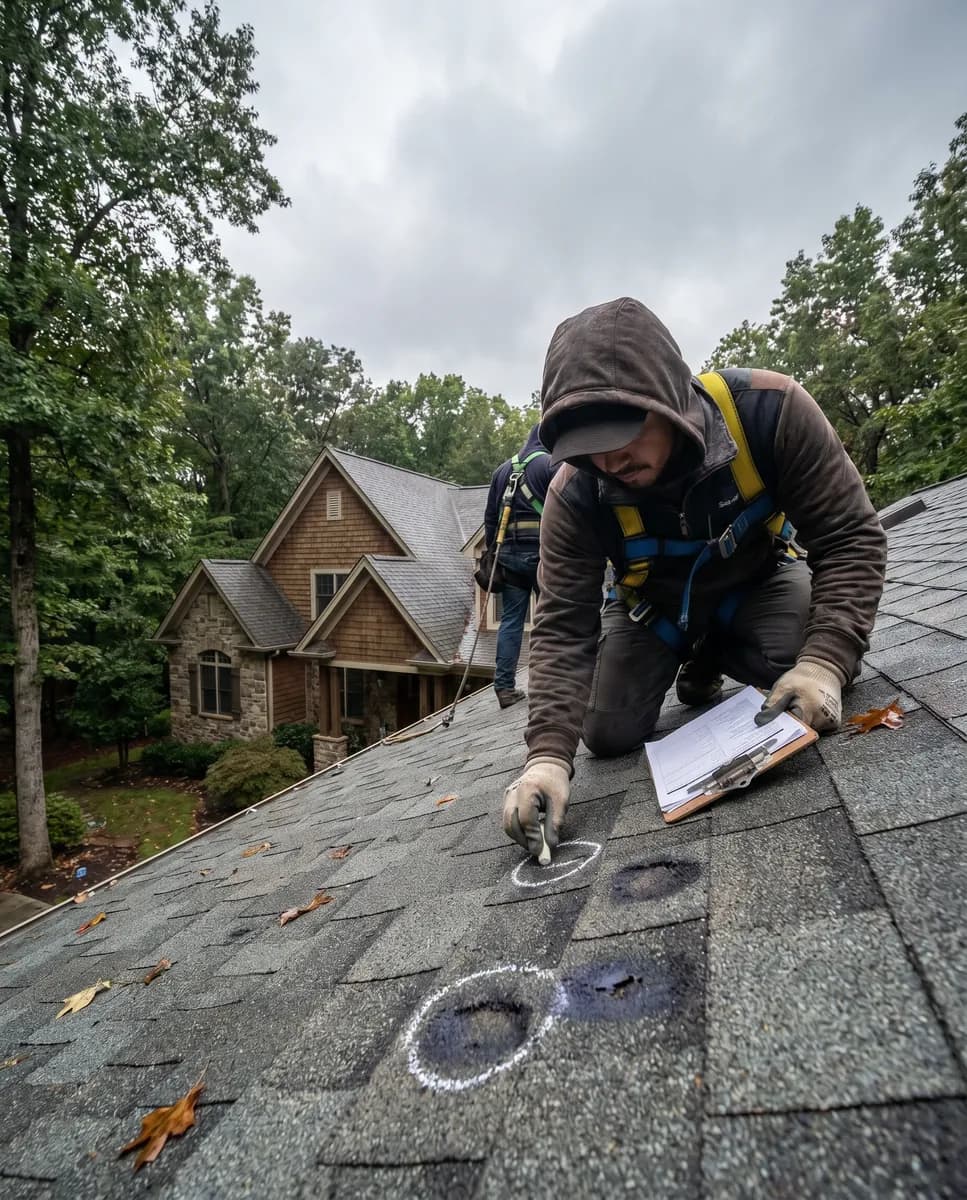
Summer brings severe thunderstorm risk across the Twin Cities metro, and the western suburbs sit in a corridor that sees frequent activity from late May through August. Golf ball-sized hail crossed the Plymouth and Minnetonka area in 2025 storm events — hailstones of that diameter hit asphalt shingles at speeds that cause granule loss and mat bruising even when they do not punch through outright. Hail damage of that type does not show up clearly from the ground; it takes someone on the roof walking the field, checking ridge caps and the low-traffic sections near valleys where granule loss concentrates. Wind gusts during severe thunderstorm warnings regularly exceed 60 to 70 mph in Hennepin County, and June 2025 tornado warnings extended over the Minnetonka area. Class 4 impact-resistant shingles are worth specifying on any Minnetonka replacement — they absorb hail energy without granule loss and qualify for homeowners insurance discounts in Minnesota that can reduce annual premium costs meaningfully over the life of the roof.
Residential Services
Roofing services in Minnetonka
We offer the full residential menu from our Central Minnesota base — the same crew, the same standards, across all 43 Minnesota cities we serve.
Replacement in Minnetonka
Full residential roof replacement with architectural shingles, metal, or specialty…
Replacement in Minnetonka→Repair in Minnetonka
Targeted roof repairs for Minnesota homes and cabins — leak diagnosis, flashing re…
Repair in Minnetonka→Storm Damage in Minnetonka
Hail and wind damage assessment, insurance claim support, and full restoration for…
Storm Damage in Minnetonka→Get in Touch
Contact Silver Loon Roofing — Minnetonka
- Serving
- Minnetonka, MN (Hennepin County)
- Phone
- (970) 555-0199
- Hours
- Mon–Fri 7 am – 6 pm
Sat 8 am – 2 pm
Dispatched from our Central Minnesota home office along the Rum River
Nearby areas we serve from Minnetonka
- Wayzata
- Plymouth
- Eden Prairie
- Hopkins
- Shorewood
Need roofing work in a nearby town? Request a free estimate — we cover the surrounding area without a travel surcharge.
Common Questions
Frequently asked questions — Minnetonka
Ready for a straight-talk roof estimate in Minnetonka?
We inspect, document, and give you a written line-item estimate before any work starts. No pressure, no surprises.