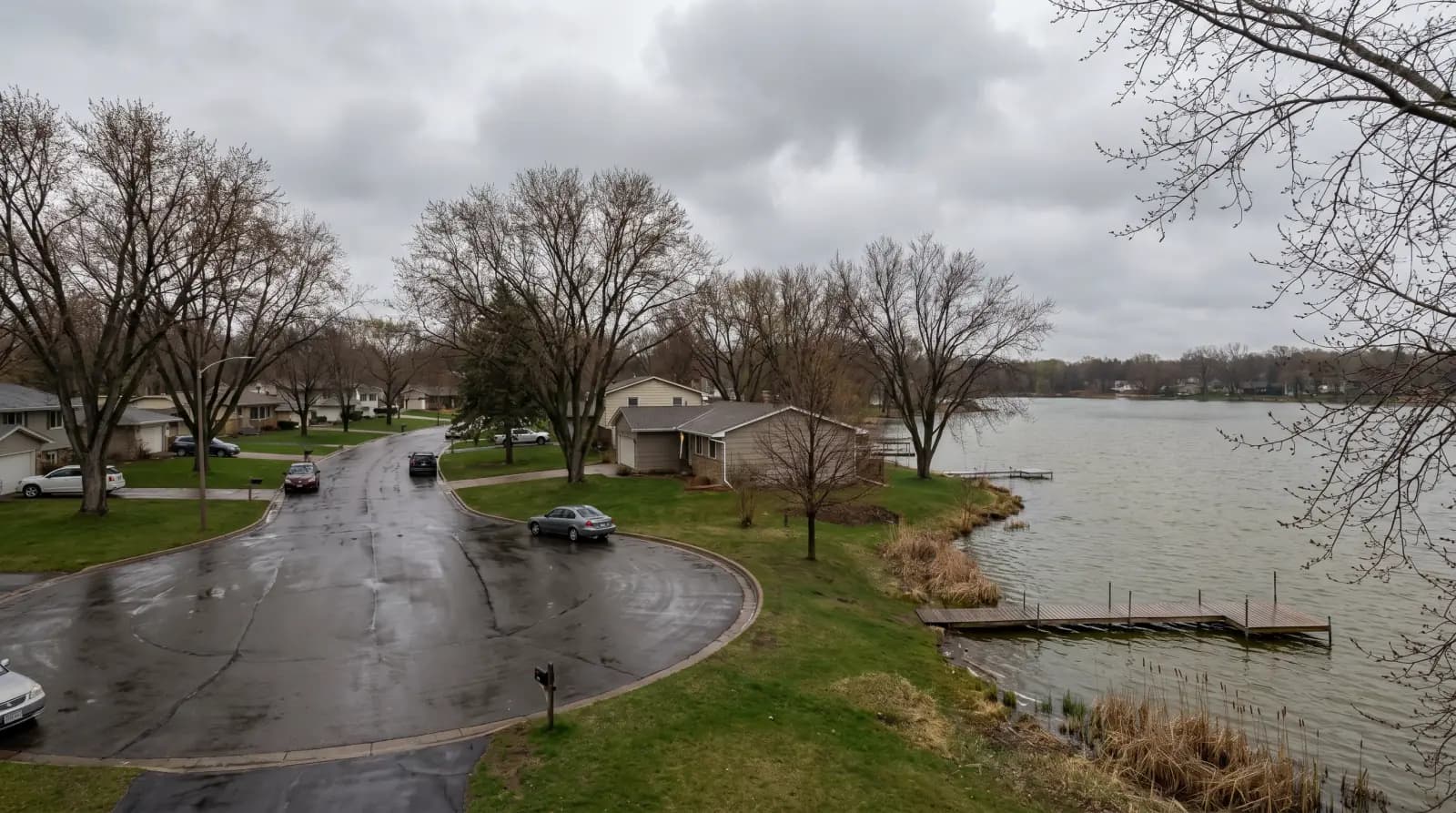
Roofing in Plymouth, MN
Plymouth roofing — Medicine Lake neighborhoods, high-value homes done right.
Silver Loon covers Plymouth (Hennepin County): roof replacement, repair, storm damage, and ice dams. Based in Central Minnesota.
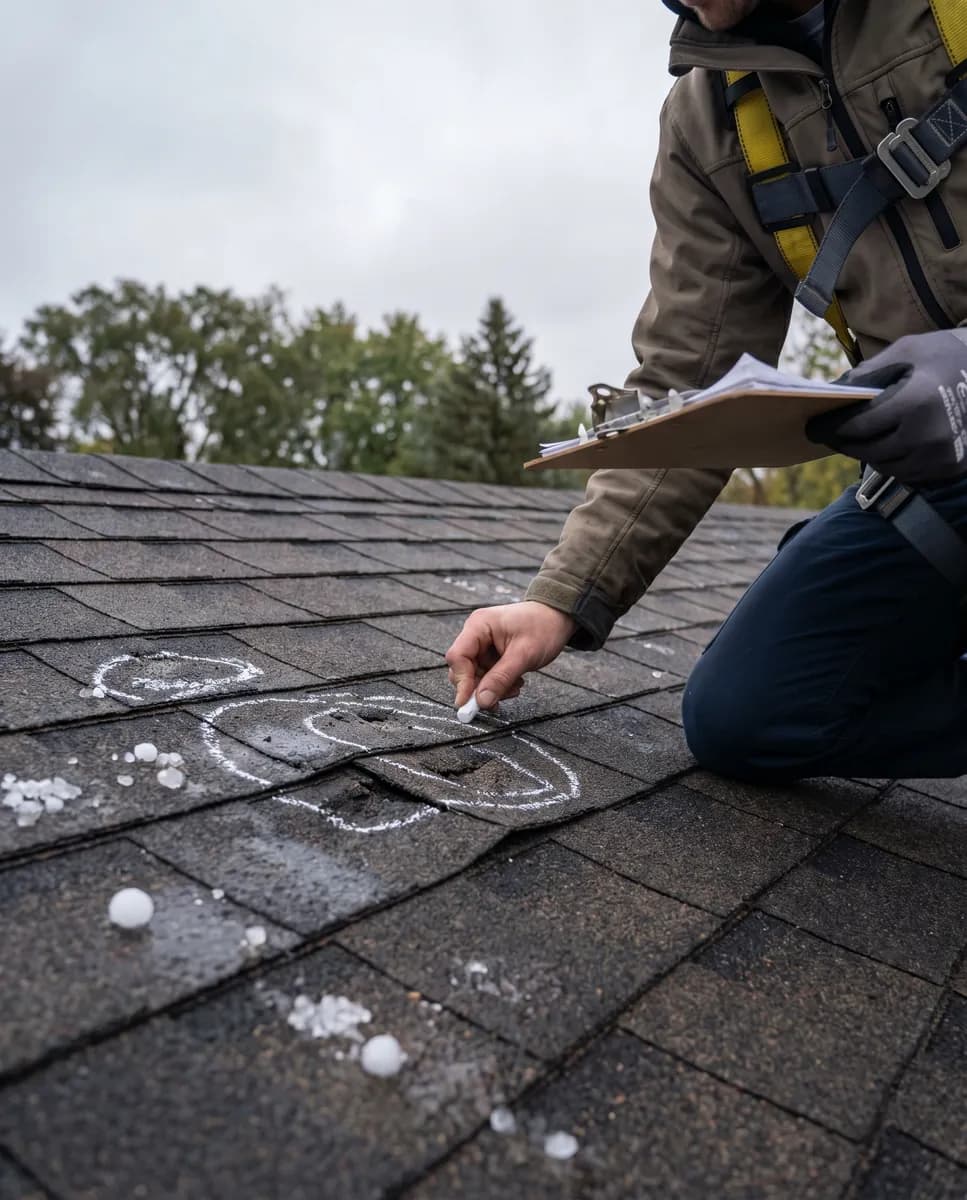
Plymouth took golf-ball hail in both July 2025 and August 2023, and the 80-mph gusts that accompanied the 2025 event put wind uplift stress on ridge caps and step flashing across a wide area. Neighborhoods near Medicine Lake and Hollydale were in the direct path. If your roof went through both of those seasons without a professional inspection, there is a real probability you are carrying mat damage that has not produced a leak yet but will.
Plymouth built fast through the 1980s and 1990s, and a large share of those homes are now right at the 25- to 35-year mark — the window where architectural shingles begin losing the fight with Minnesota winters regardless of storm history. That does not always mean replace immediately, but it does mean the inspection is not optional anymore. An hour on the roof now is worth a lot more than an emergency call in February.
About Plymouth, MN
Plymouth is Minnesota's 7th largest city and one of Hennepin County's most substantial communities, with a current population around 78,000 after peaking near 81,000 in 2020. The city sits roughly 10 miles west of Minneapolis, bounded by the I-494 / MN-55 interchange on the south and the shores of Medicine Lake on the northeast. That lake corridor shaped early settlement patterns — Plymouth was farmland well into the mid-20th century, and the shift from rural township to fully built-out suburb happened fast enough that you can still find the occasional farmstead footprint beneath a 1970s subdivision. The Plymouth History Center, housed in the 1885 Old Town Hall building, holds that transformation in its collections: rotating exhibits and oral history recordings that trace the arc from potato fields to cul-de-sacs.
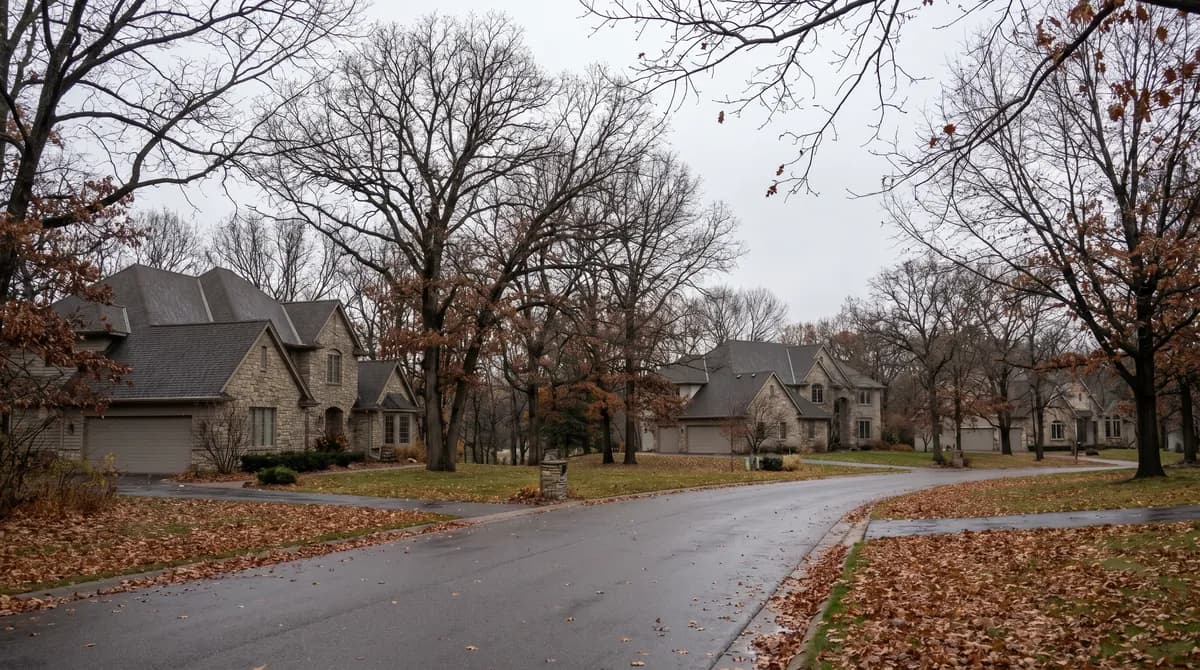
Corporate presence anchors the economy. Medtronic's global headquarters sits in the southern part of the city, and the surrounding office and research campuses draw a professional workforce that has made Plymouth one of the highest-income communities in the state — median household income exceeds $136,000. Neighborhoods like Hollydale reflect that profile: well-maintained single-family homes on landscaped lots, mature tree canopy, and the kind of long-term ownership that makes roof condition a real financial consideration rather than an afterthought. This is not a market where people let maintenance slide.
The city's character is steady and practical. Plymouth residents expect contractors to arrive when they say they will, communicate clearly, and leave the site the way they found it. That expectation suits us — it is how we operate everywhere, and it is a straightforward standard to meet in a market where the homeowner is typically present, informed, and paying attention.
Housing stock and market
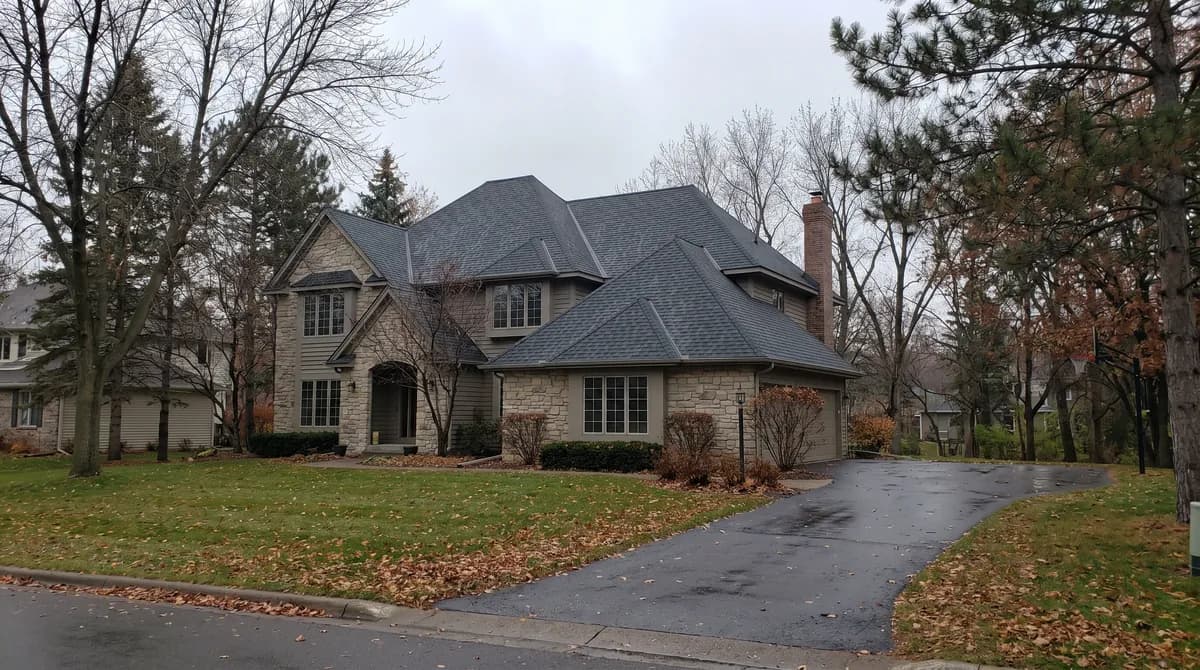
Plymouth's housing stock is dominated by single-family homes, the majority built between 1975 and 2005 during the city's rapid growth decades. Median home values run near $580,000, which places the average Plymouth replacement job at the higher end of the Twin Cities cost band — not because we charge more here, but because the homes are larger, often on steeper-pitched roofs, and more likely to have complex flashing details around skylights, multiple dormers, or standing-seam accent elements. A straightforward ranch replacement is the exception rather than the rule.
The 1985-to-2005 construction wave is worth understanding from a roofing standpoint. Homes built in that period were typically installed with 25-year architectural shingles that are now at or past their design life. Many also have attic insulation levels that met the energy code of the time — roughly R-19 to R-30 — which is meaningfully below the R-49 to R-60 that current Minnesota energy code requires in Climate Zone 6. That gap matters in winter: under-insulated attic floors allow heat to escape through the deck, setting up the conditions for ice dam formation. A significant share of Plymouth's existing housing stock is quietly sitting in that window where shingle age and ventilation deficiencies are compounding each other. A full replacement that includes a ventilation upgrade addresses both at once.
Newer construction on the west edges of Plymouth — subdivisions built in the 2010s — tends to have steeper pitches, higher shingle grades, and better attic detailing. Those roofs are not yet near end of life, but they are not immune to hail damage, which does not care how old the shingles are.
Weather and roof realities
Plymouth averages 52 inches of snowfall annually, with the season running from November through late March in most years. That snow accumulation, combined with the freeze-thaw cycles that move through the Twin Cities metro from December into February, creates persistent ice dam pressure on homes without adequate attic insulation and unobstructed soffit-to-ridge ventilation. The mechanism is straightforward: warm air escaping the living space heats the roof deck above freezing, melts the snow on the field of the roof, and the meltwater runs down until it hits the cold eave overhang and refreezes. Once a dam builds, any water backing up behind it will find the lowest-resistance path — usually a nail hole, a short ice-and-water-shield lap, or an aging flashing joint at a valley or dormer. Plymouth's 1990s housing stock is in the exact range of age and construction type where this pattern repeats every winter.
Summer weather adds a different category of risk. Plymouth lies in Minnesota's tornado alley, where storm tracks moving northeast out of the Dakotas and Iowa funnel through the Twin Cities metro. Hail is the primary roof killer in this corridor — golf ball-sized stones were reported in Plymouth during July 2025 storms and again during August 2023 events. Hailstones of that size hit asphalt shingles hard enough to fracture the mat beneath the granule layer, damage that does not always show up as a visible crack but accelerates granule loss and shortens the remaining life of the shingle by years. Wind gusts up to 80 mph have been recorded in Plymouth-area severe weather events, which is well above the threshold that causes tab lift and seal-strip failure on standard shingles.
The combination of hail frequency and high home values makes Plymouth one of the stronger markets for impact-resistant Class 4 shingles. The upgrade cost over standard architectural shingles typically runs $800 to $2,000 on a full replacement, and most major insurers active in Hennepin County offer a discount on the hail and wind portion of the premium for Class 4-rated products. Over a 15-year period, the math often favors the upgrade — and the shingle performs better in future events regardless of the insurance calculation. We include both options in written estimates so Plymouth homeowners can see the actual numbers and decide.
Residential Services
Roofing services in Plymouth
We offer the full residential menu from our Central Minnesota base — the same crew, the same standards, across all 43 Minnesota cities we serve.
Replacement in Plymouth
Full residential roof replacement with architectural shingles, metal, or specialty…
Replacement in Plymouth→Repair in Plymouth
Targeted roof repairs for Minnesota homes and cabins — leak diagnosis, flashing re…
Repair in Plymouth→Storm Damage in Plymouth
Hail and wind damage assessment, insurance claim support, and full restoration for…
Storm Damage in Plymouth→Get in Touch
Contact Silver Loon Roofing — Plymouth
- Serving
- Plymouth, MN (Hennepin County)
- Phone
- (970) 555-0199
- Hours
- Mon–Fri 7 am – 6 pm
Sat 8 am – 2 pm
Dispatched from our Central Minnesota home office along the Rum River
Nearby areas we serve from Plymouth
- Wayzata
- Minnetonka
- Maple Grove
- New Hope
- Golden Valley
Need roofing work in a nearby town? Request a free estimate — we cover the surrounding area without a travel surcharge.
Common Questions
Frequently asked questions — Plymouth
Ready for a straight-talk roof estimate in Plymouth?
We inspect, document, and give you a written line-item estimate before any work starts. No pressure, no surprises.