Roofing in Savage, MN
Savage roofing — Scott County river suburbs, straightforward work and clear estimates.
Silver Loon covers Savage (Scott County): roof replacement, repair, storm damage, and ice dams. Based in Central Minnesota.
Scott County has recorded more than 170 hail events near Savage since 2004, and the September 2021 EF0 added tornado damage to that total. Highland Forest and Park Valley are full of homes from the 1980s and 1990s buildout — solid construction, but at the age where storm history starts compounding. If your roof has been through multiple hail seasons without a professional inspection, the odds are good that there is something worth knowing about before the next one.
Homeowners near the Prior Lake border ask the same question every spring: is the damage worth filing on, or is it better to wait? The honest answer depends on what is actually on the roof, and that answer only comes from getting on it. An inspection is a low-cost way to make a high-cost decision with real information instead of guesswork.
About Savage, MN
Savage is a Scott County suburb of around 33,000 residents sitting along the Minnesota River, roughly 20 miles southwest of downtown Minneapolis via Highway 13 and I-35W. The city carries a specific history most Minnesota suburbs do not: it was named for Marion Willis Savage, owner of Dan Patch, the harness racing horse that set a world record in 1906 and held it for nearly 50 years. A bronze sculpture outside the Savage Public Library depicts the two together — Dan Patch rearing, Savage standing beside him — and it remains the most distinctive piece of public art in Scott County. During World War II the river corridor here served as Port Cargill, a shipbuilding operation that launched vessels for the war effort, and Camp Savage on the city's eastern edge trained military intelligence personnel in Japanese language for the Pacific Theater. Those facts are not just local color; they tell you that this stretch of the Minnesota River has been doing serious work for a long time.
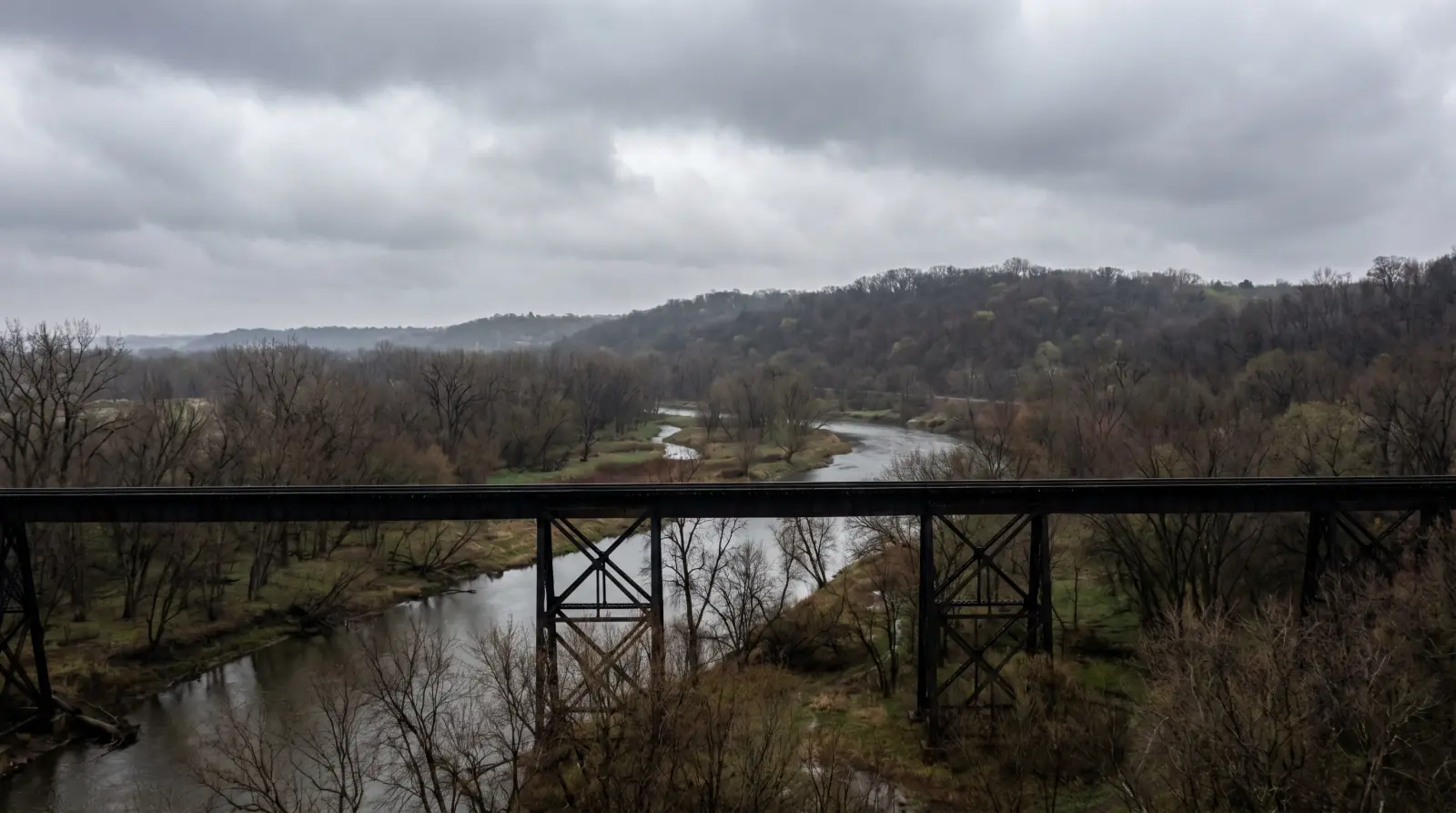
The Minnesota Valley National Wildlife Refuge runs along the northern and western edges of Savage, a 14,000-acre corridor of river bottom, marsh, and hardwood forest that begins a short distance from residential streets in the city's older neighborhoods. Murphy-Hanrehan Park Reserve lies to the south, adding another layer of open space that shapes the city's character. Savage is not a dense inner-ring suburb — it reads as a community that kept significant natural buffers while growing its residential base, which means storm exposure along the river corridor and open reserve edges is a real factor when specifying roofing materials.
Savage's population grew 20 percent from 2010 to 2020, one of the stronger growth rates in Scott County during that decade. The draw is straightforward: median household incomes over $122,000, access to I-35W and Highway 13 for Minneapolis commuters, a school district that consistently scores well, and a housing market that still offers more space per dollar than comparable positions closer to the city. The Dan Patch Trail connects neighborhoods to parks and commercial corridors, and the community has enough of a civic core that it does not feel like a pure commuter bedroom. That combination keeps the housing stock active and the replacement cycle running.
Housing stock and market
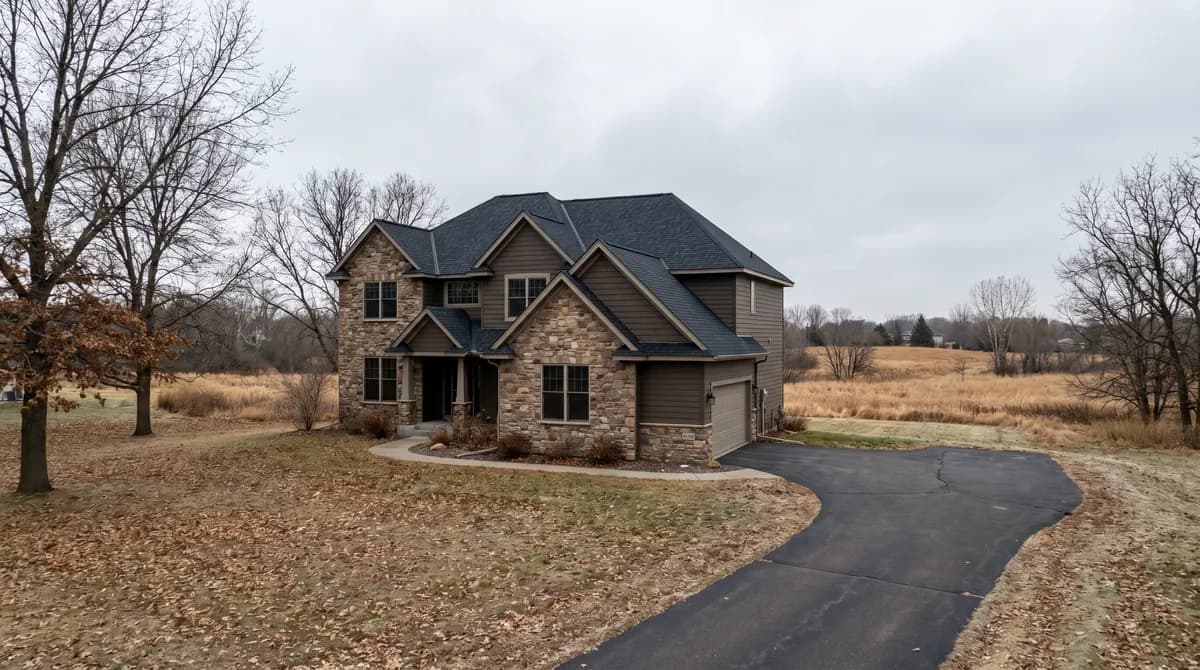
Savage's housing stock reflects the city's growth arc from the 1980s through the 2000s. Neighborhoods like Highland Forest and Park Valley carry a substantial share of single-family homes built between 1990 and 2010 — three- and four-bedroom colonials and two-stories on lots with established landscaping, at median home values around $410,000. That era of construction used shingle systems that performed well through the first decade but are now entering the range where full system evaluation makes sense. A roof installed in 1998 or 2003 is not automatically at end of life, but it has absorbed 20 to 25 Minnesota winters, and the granule loss, flashing wear, and ice dam cycles from those years add up in ways that are not always visible from the ground.
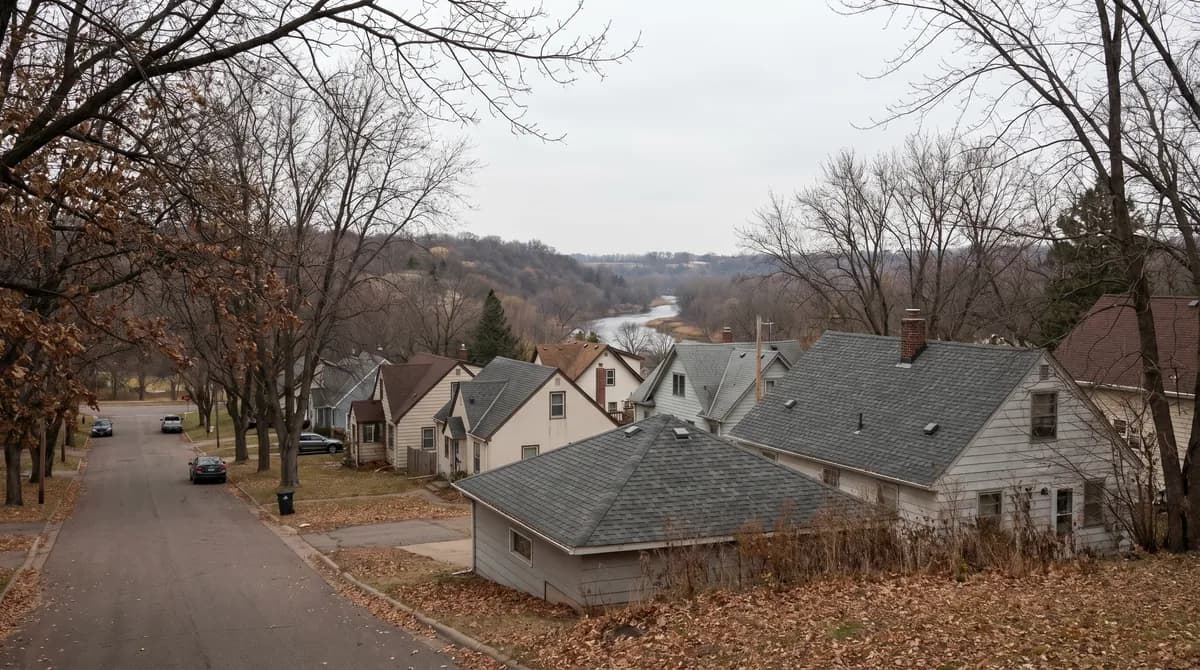
Homeownership rates in Savage run above 84 percent, which means the overwhelming majority of residents carry roof maintenance responsibility directly. Townhome clusters in the Savage Southeast area and near the Highway 13 corridor add some attached housing to the mix, but detached single-family homes on quarter-acre to half-acre lots dominate the residential footprint. Lot size matters for roofing logistics: most Savage properties have room to stage materials and position a dumpster without blocking a neighbor's driveway or creating a street hazard, which keeps the project schedule predictable.
The newer construction on Savage's southern and eastern edges — developments added after 2005 — uses more complex roof geometry than the simpler gable profiles common in 1990s stock. Hip-and-valley plans with multiple roof planes shed water well but create more flashing intersections that require precise installation and periodic maintenance. Valley flashings, step flashings at dormers, and saddle flashings at chimneys all accumulate debris and develop wear points on the same schedule regardless of how well the original installation was done. Any Savage home with more than two roof planes is worth putting on a five-year inspection cycle rather than waiting for interior evidence of a problem.
Weather and roof realities in Savage
Savage averages 50 inches of annual snowfall, and January lows average 8°F — cold enough that the freeze-thaw cycles that drive ice dam formation run through most of the winter season rather than just the marginal weeks of early spring and late fall. When attic heat escapes through an under-insulated deck, it keeps the roof surface above 32 degrees even as outside temperatures stay well below it. Snow on the upper slope melts, runs down toward the eave, hits the cold overhang, and refreezes. Once a dam builds, standing water backs up the slope under pressure. On a home with a 1990s-era attic insulation depth — commonly R-19 to R-25 in that construction period, well short of Minnesota's current R-49 recommendation — this process repeats every winter with meaningful snowfall. The visible result is a ceiling stain. The structural problem is in the attic, and it does not resolve without addressing insulation depth and ventilation continuity from soffit to ridge.
The Minnesota River valley corridor along the city's northern edge creates measurable wind exposure. The open floodplain and wildlife refuge do not slow incoming storm fronts the way developed terrain does. Homes near the river bluffs, along Highway 13, and on the western edge of Highland Forest see higher gusts during severe thunderstorm events than neighborhoods positioned further inland and east. Over 170 hail reports near Savage have been recorded since 2004, and an EF0 tornado was confirmed within the city limits in September 2021. Scott County sits in a storm track that produces significant events in most years, and the open river corridor amplifies what those storms bring to rooftops along the valley edge.
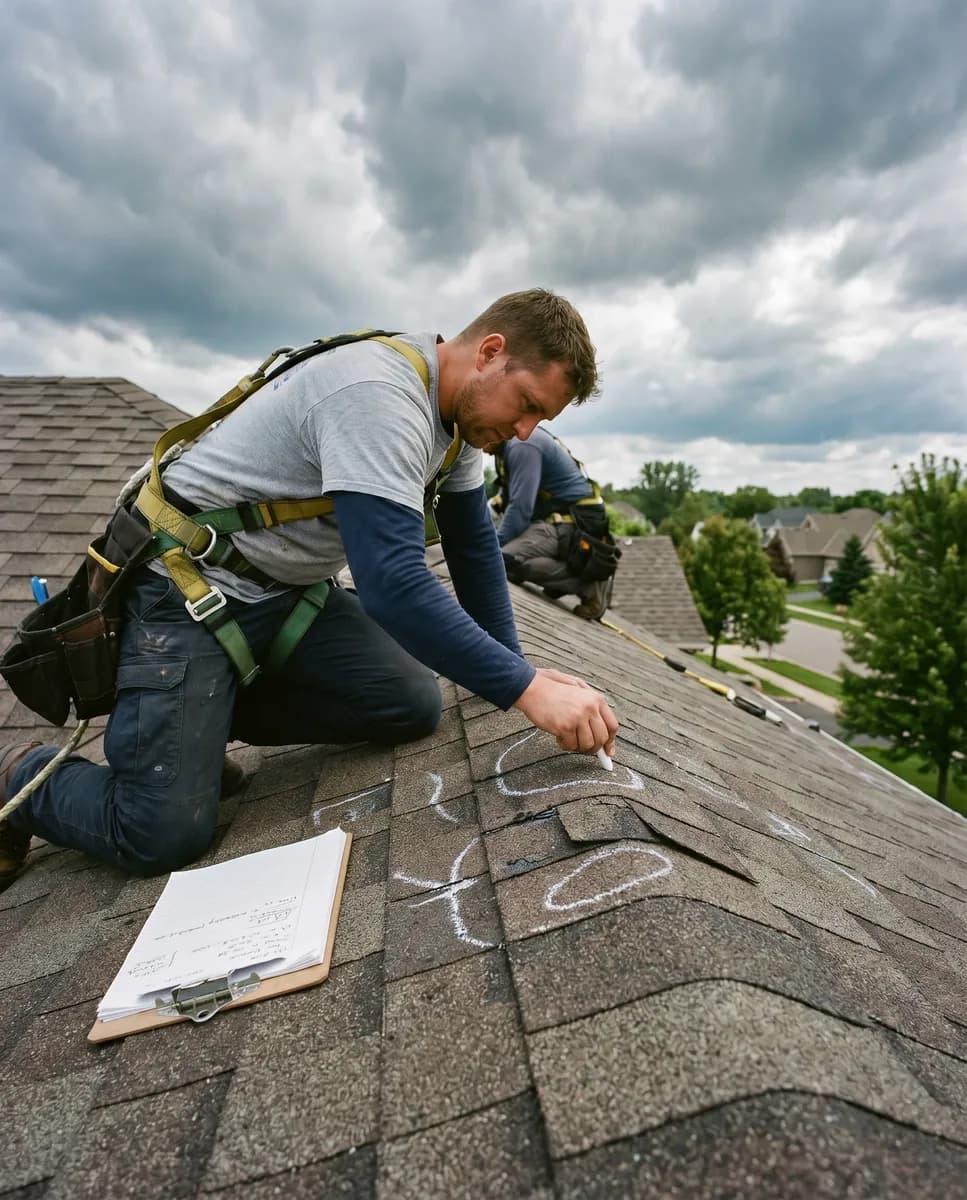
Hail that reaches golf ball size — a diameter of roughly 1.75 inches — hits asphalt shingles at velocities the granule layer cannot absorb without bruising or cracking the mat underneath. That damage is not visible from the ground and does not always produce an immediate leak. What it does is shorten the roof's serviceable life by several years and accelerate UV degradation on the exposed mat. An inspection after any event with stones larger than quarter size is worth scheduling before the season moves on and the evidence fades. We document impact patterns with photographs before the adjuster arrives, attend the claim inspection with your insurer, and provide a line-item scope the adjuster can match directly against our written estimate. Impact-resistant Class 4 shingles are worth specifying on any Savage replacement — the protection they provide through subsequent storm seasons is real, and the homeowners insurance discount they can qualify for in Minnesota improves the return on the upgrade over a 30-year shingle life.
Residential Services
Roofing services in Savage
We offer the full residential menu from our Central Minnesota base — the same crew, the same standards, across all 43 Minnesota cities we serve.
Replacement in Savage
Full residential roof replacement with architectural shingles, metal, or specialty…
Replacement in Savage→Repair in Savage
Targeted roof repairs for Minnesota homes and cabins — leak diagnosis, flashing re…
Repair in Savage→Storm Damage in Savage
Hail and wind damage assessment, insurance claim support, and full restoration for…
Storm Damage in Savage→Get in Touch
Contact Silver Loon Roofing — Savage
- Serving
- Savage, MN (Scott County)
- Phone
- (970) 555-0199
- Hours
- Mon–Fri 7 am – 6 pm
Sat 8 am – 2 pm
Dispatched from our Central Minnesota home office along the Rum River
Nearby areas we serve from Savage
- Prior Lake
- Burnsville
- Shakopee
- Bloomington
- Jordan
Need roofing work in a nearby town? Request a free estimate — we cover the surrounding area without a travel surcharge.
Common Questions
Frequently asked questions — Savage
Ready for a straight-talk roof estimate in Savage?
We inspect, document, and give you a written line-item estimate before any work starts. No pressure, no surprises.