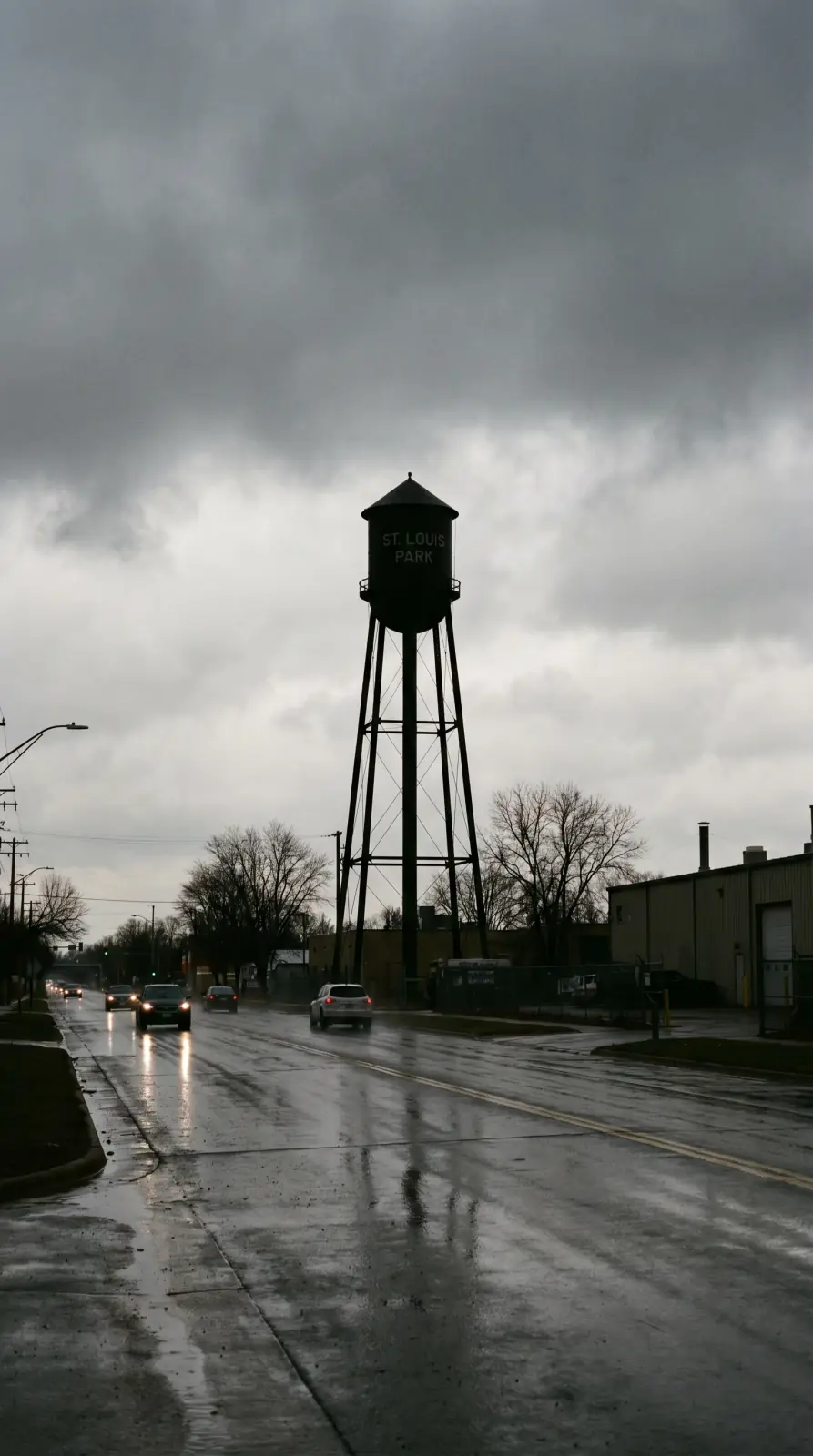
Roofing in St. Louis Park, MN
St. Louis Park roofing — postwar ramblers to modern infill, done right.
Silver Loon covers St. Louis Park (Hennepin County): roof replacement, repair, storm damage, and ice dams. Based in Central Minnesota.
Quarter-size hail in 2024 and 80-mph gusts in August 2024 put St. Louis Park through a two-part test that most homes in the Texa-Tonka and Aquila neighborhoods were not designed to handle in the same season. If your home went through both of those events without a professional roof inspection, there is a real probability that the mat is carrying damage that has not produced a visible leak yet.
St. Louis Park's housing stock is predominantly postwar — 1950s and 1960s construction where R-19 and R-22 attic insulation was standard, and where ice dam formation is annual rather than occasional. The fix for recurring ice dams is not on the roof surface; it is in the attic assembly. We assess both in the same visit so you understand what you are dealing with before deciding on next steps.
About St. Louis Park, MN
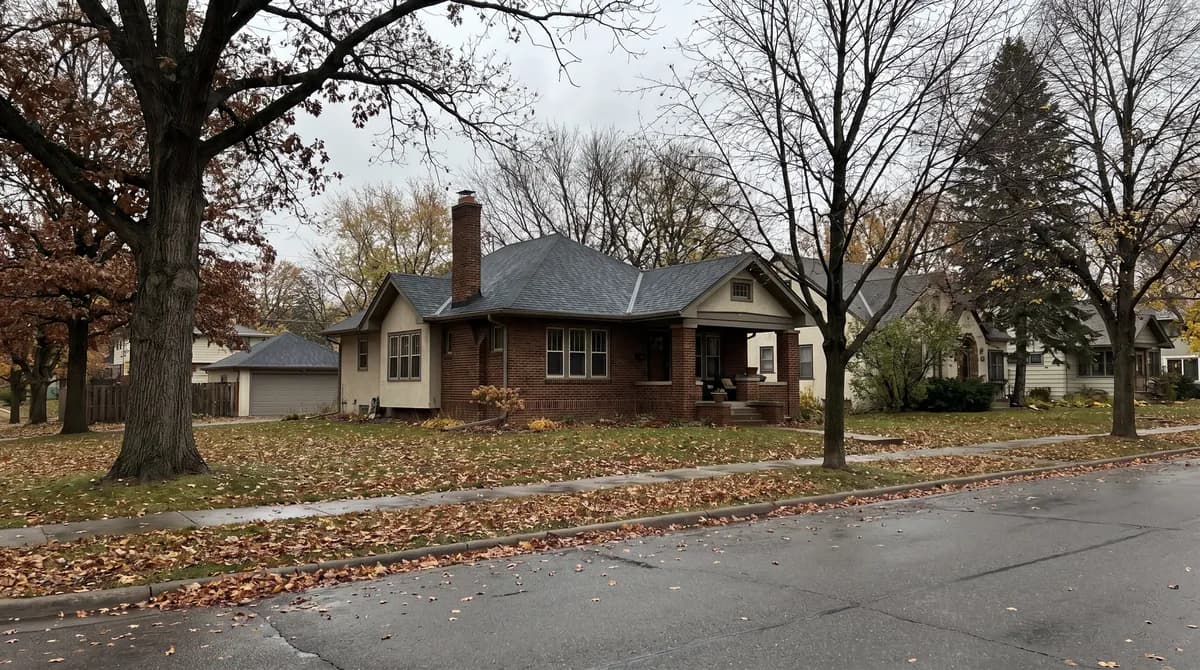
St. Louis Park sits directly west of Minneapolis — separated from the city by a few blocks rather than a county line — with a 2024 population of approximately 49,900 residents across roughly 11 square miles. The city's growth story is unusually compressed: in 1940, the population was 7,737. By the early 1960s it had crossed 50,000, driven almost entirely by returning veterans and their families who needed housing within commuting distance of Minneapolis jobs. That surge produced the city's defining architectural character: block after block of single-story ramblers on 60- to 75-foot lots, built quickly and affordably, intended to last a generation and now in their seventh or eighth decade of service.
The Texa-Tonka neighborhood on the western edge and Minikahda Vista closer to the Minneapolis border both reflect this postwar character — curved streets laid out by subdivision planners, detached garages, mature canopy oaks and elms that have grown to dwarf the houses beneath them. The Aquila neighborhood near the Highway 100 and Highway 7 interchange developed with a significant Russian-speaking community that gave it a distinct character from neighboring subdivisions. Nordic Ware, the cookware manufacturer that created the Bundt pan, has operated in St. Louis Park since 1946. Its facility sits near the Peavey-Haglin grain elevator, a 125-foot cylindrical reinforced concrete structure built in 1899 that was the first of its kind in the world and remains a landmark visible from Highway 100.
More recent decades brought infill development, townhome clusters, and mixed-use corridors along Excelsior Boulevard and Minnetonka Boulevard. The city's proximity to downtown Minneapolis — roughly 15 minutes via I-394 in normal traffic — kept demand steady among buyers who wanted a detached house without a long commute. That sustained pressure has pushed median home values into the $380,000 to $420,000 range, a considerable increase from the modest prices those postwar ramblers originally commanded.
Housing stock and market
The dominant housing type in St. Louis Park is the postwar rambler: single story, low roof pitch, attached or detached one-car garage, basement with a poured concrete or block foundation. Attic insulation in a typical rambler from this era consists of blown or batt fiberglass installed during a 1970s or 1980s retrofit — often R-19 to R-22, well below the R-49 that current Minnesota energy code recommends for attic floors. Soffit-to-ridge ventilation was rarely designed into the original build and was added piecemeal if at all. That combination of under-insulated attics and inadequate ventilation is the primary driver of ice dam formation on these roofs every winter.
A second cohort arrived in the 1970s and 1980s — two-story colonials and split-entry homes that filled remaining lots in established neighborhoods. These homes have steeper pitches than the original ramblers, which helps with snow shedding, but their attic insulation and ventilation histories are similarly inconsistent. The most recent infill — townhomes, paired homes, and single-family new builds from the 2000s onward — generally meets or exceeds modern energy code and does not carry the same structural vulnerabilities, though no roof is immune to storm damage.
For buyers and sellers, roof condition on a St. Louis Park rambler is a meaningful transaction variable. A home with documented replacement in the last 5 to 7 years, a Class 4 impact-resistant shingle, and a current attic ventilation report commands attention in a market where buyers know that insurance underwriters scrutinize roof age on older suburban housing. We write estimates that are readable line by line. Nothing is added after signing — the price you approve is the price you pay.
Weather and roof realities
St. Louis Park averages 54 inches of annual snowfall, with the accumulation season running from November into March most years. The freeze-thaw cycle through January and February is the primary mechanical stress on roofing here. Temperatures cross 32 degrees multiple times per week during those months, which means a rambler with marginal attic insulation will produce ice dam conditions on a predictable schedule. Attic heat escapes through the deck, warms the surface enough to melt the bottom layer of snow, and that meltwater runs down the slope until it hits the cold eave overhang and refreezes. The resulting dam backs standing water up the slope, and water under pressure finds any gap — a failed flashing joint, an unsealed nail penetration, an ice-and-water-shield termination that stops short of the exterior wall. On a 1952 rambler in the Texa-Tonka neighborhood where the attic has never been properly air-sealed, this sequence plays out every winter that brings meaningful snowfall.
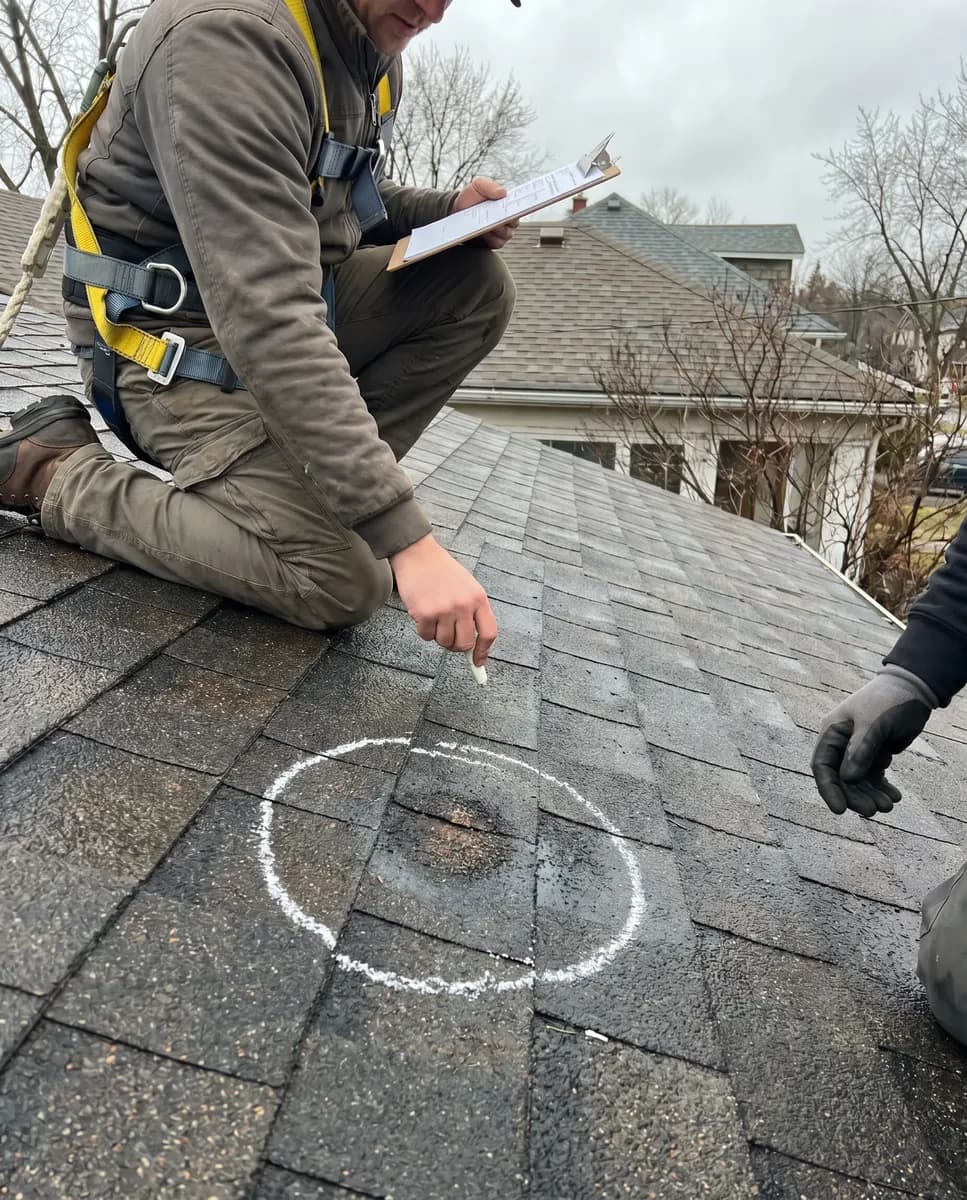
Summer brings severe thunderstorm exposure typical of the Twin Cities metro. Radar records show 62 hail events detected near St. Louis Park historically, with quarter-sized hail documented in 2024 storms. Quarter-sized stones hit asphalt shingles at sufficient velocity to cause granule loss and mat bruising even when they do not punch through outright. That bruising is not visible from the ground — you need someone on the roof walking the field, checking ridge cap sections and any low-slope transitions where granule loss concentrates. Wind gusts in the August 2024 storm reached 80 mph, well above the threshold for lifting tab edges on shingles installed without full-seal adhesive strips. Tornado risk across the metro is real, and any severe thunderstorm warning in St. Louis Park warrants a post-storm roof check.
Class 4 impact-resistant shingles are worth specifying on any St. Louis Park replacement. The hail frequency data supports the investment on its own, and Minnesota homeowners insurance carriers offer premium discounts for Class 4 installations that typically recover a meaningful portion of the material cost difference over 5 to 7 years. For lower-pitch rambler roofs — anything under a 4:12 pitch — standing seam metal is worth discussing. It eliminates exposed fasteners and lap seams entirely and handles the low-slope ice dam geometry better than any shingle system. The upfront cost is higher, but on a roof that has sent water into the attic twice in the last decade, the long-term math often favors metal.
Residential Services
Roofing services in St. Louis Park
We offer the full residential menu from our Central Minnesota base — the same crew, the same standards, across all 43 Minnesota cities we serve.
Replacement in St. Louis Park
Full residential roof replacement with architectural shingles, metal, or specialty…
Replacement in St. Louis Park→Repair in St. Louis Park
Targeted roof repairs for Minnesota homes and cabins — leak diagnosis, flashing re…
Repair in St. Louis Park→Storm Damage in St. Louis Park
Hail and wind damage assessment, insurance claim support, and full restoration for…
Storm Damage in St. Louis Park→Get in Touch
Contact Silver Loon Roofing — St. Louis Park
- Serving
- St. Louis Park, MN (Hennepin County)
- Phone
- (970) 555-0199
- Hours
- Mon–Fri 7 am – 6 pm
Sat 8 am – 2 pm
Dispatched from our Central Minnesota home office along the Rum River
Nearby areas we serve from St. Louis Park
- Minneapolis
- Minnetonka
- Hopkins
- Edina
- Golden Valley
Need roofing work in a nearby town? Request a free estimate — we cover the surrounding area without a travel surcharge.
Common Questions
Frequently asked questions — St. Louis Park
Ready for a straight-talk roof estimate in St. Louis Park?
We inspect, document, and give you a written line-item estimate before any work starts. No pressure, no surprises.